Whales of the St. Lawrence
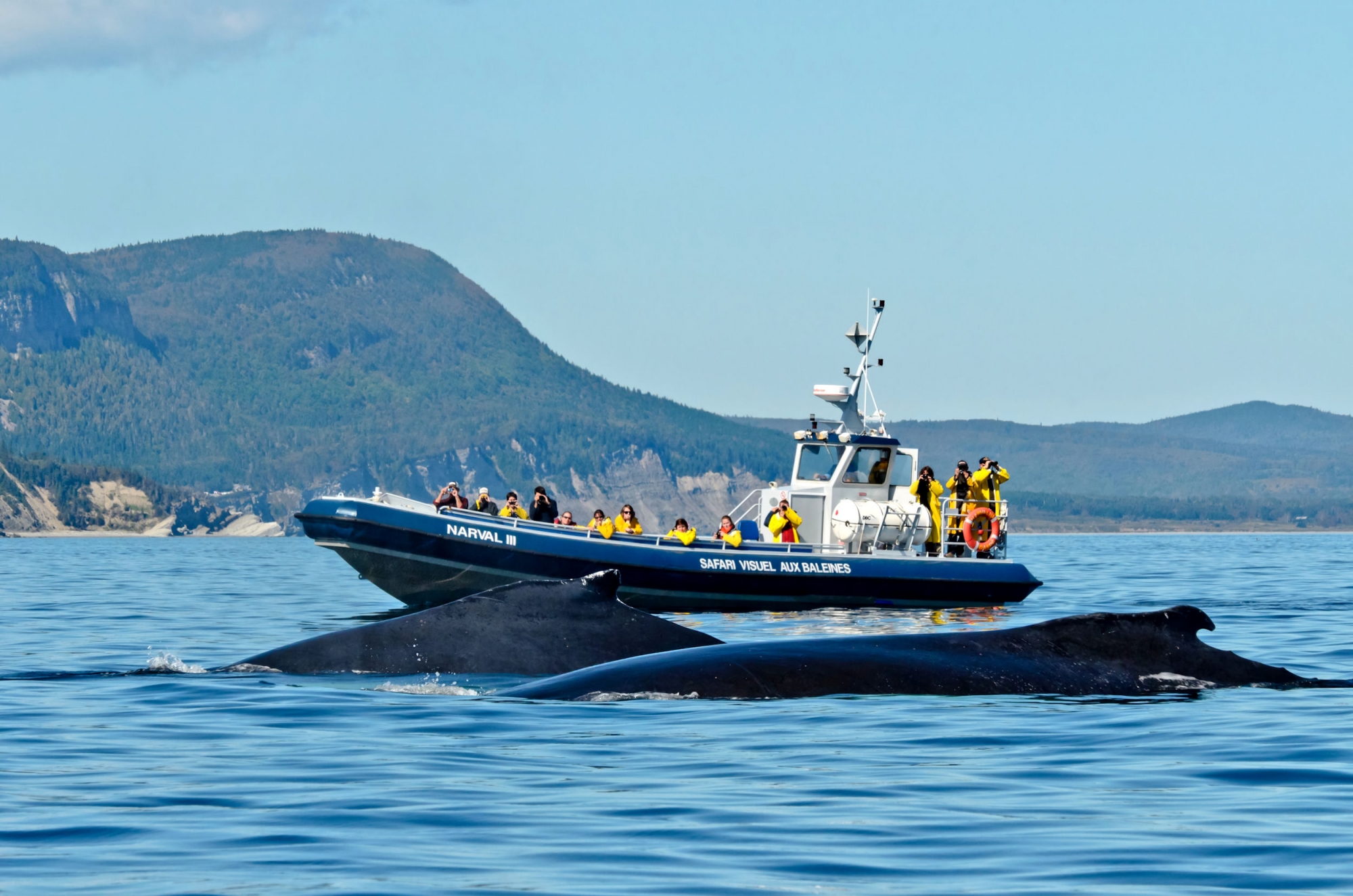
About 80 species of whales live in the world’s seas and oceans. Of these, 12 migrate to the St. Lawrence every year while one lives there year-round. The fact that so many species are found in such a relatively small ecosystem makes the St. Lawrence one of the best places to observe whales in the world. Many companies offer whale-watching excursions between May and October.
Toothed whales – 8 species in Québec (70 worldwide)
1. Harbour porpoise – 1.5 to 2 metres, 45 to 50 kg
The smallest of the St. Lawrence cetaceans and one of the smallest in the world, the harbour porpoise is hard to spot. Over 20,000 live in the St. Lawrence.
2. Atlantic white-sided dolphin – 2 to 2.7 metres, 180 to 230 kg
These dolphins swim in pods of hundreds of individuals and love to play in the wake of passing boats. They are found in great numbers in the gulf and occasionally visit the estuary.
3. White-beaked dolphin – 2.5 to 3 metres, 135 to 275 kg
Like the white-sided dolphins, these cetaceans swim in large pods and like to play in the wake of passing boats. They visit the gulf regularly but are generally found further north.
4. Beluga whale – 3 to 4.5 metres, 0.7 to 1.5 tonnes
Belugas have the widest vocal range among cetaceans. The only whales to live year round in the St. Lawrence, they are easily identifiable by their white skin. Note that beluga whales are on the list of endangered species.
5. Long-finned pilot whale – 4 to 5 metres, 2 to 3.5 tonnes
These large dolphins form family units of several dozen individuals. They regularly visit the gulf, but are rarely found in the estuary.
6. Killer whale – 6 to 7 metres, 3 to 7 tonnes
The largest of the dolphins, killer whales are rarely seen in the St. Lawrence. However, a pod of three individuals has been regularly sighted in the gulf off the coast of Mingan since 1984.
7. Northern bottlenose whale – 6 to 10 metres, 3 to 7 tonnes
A small population of northern bottlenose whales lives in the waters off the coast of Nova Scotia. To date, the only individuals spotted in the St. Lawrence have been live stranded whales.
8. Sperm whale – 11 to 15 metres, 15 to 40 tonnes
Immortalized in Herman Melville’s Moby Dick, sperm whales have been regularly sighted in the St. Lawrence Estuary since 1991.
Baleen whales – 5 species in Québec (11 worldwide)
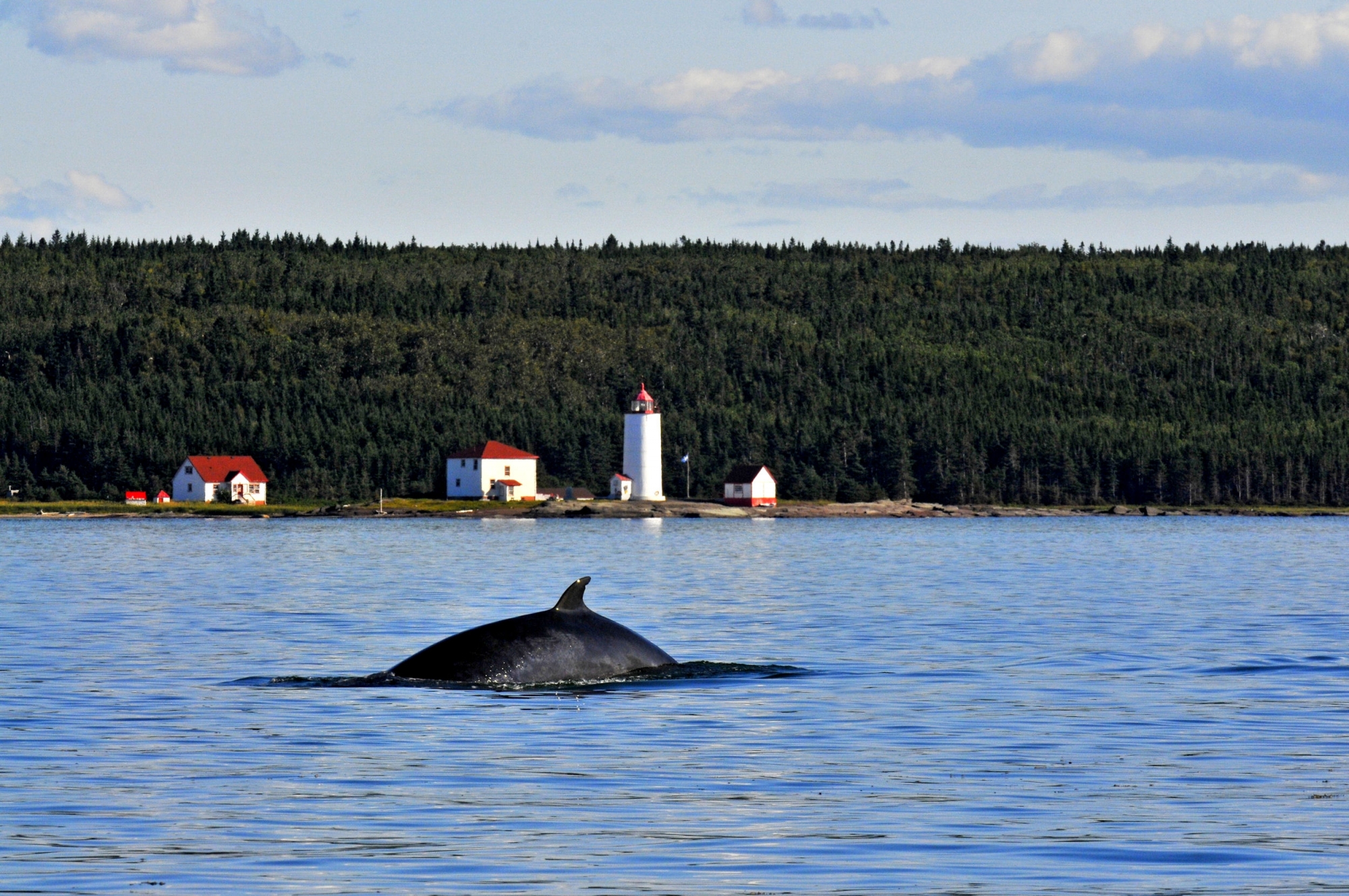
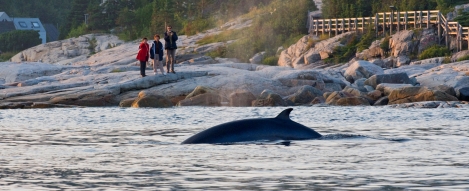
1. Minke whale – 6 to 9 metres, 6 to 8 tonnes
The smallest of the baleen whales, minkes display their pink undersides as they hunt near the shore.
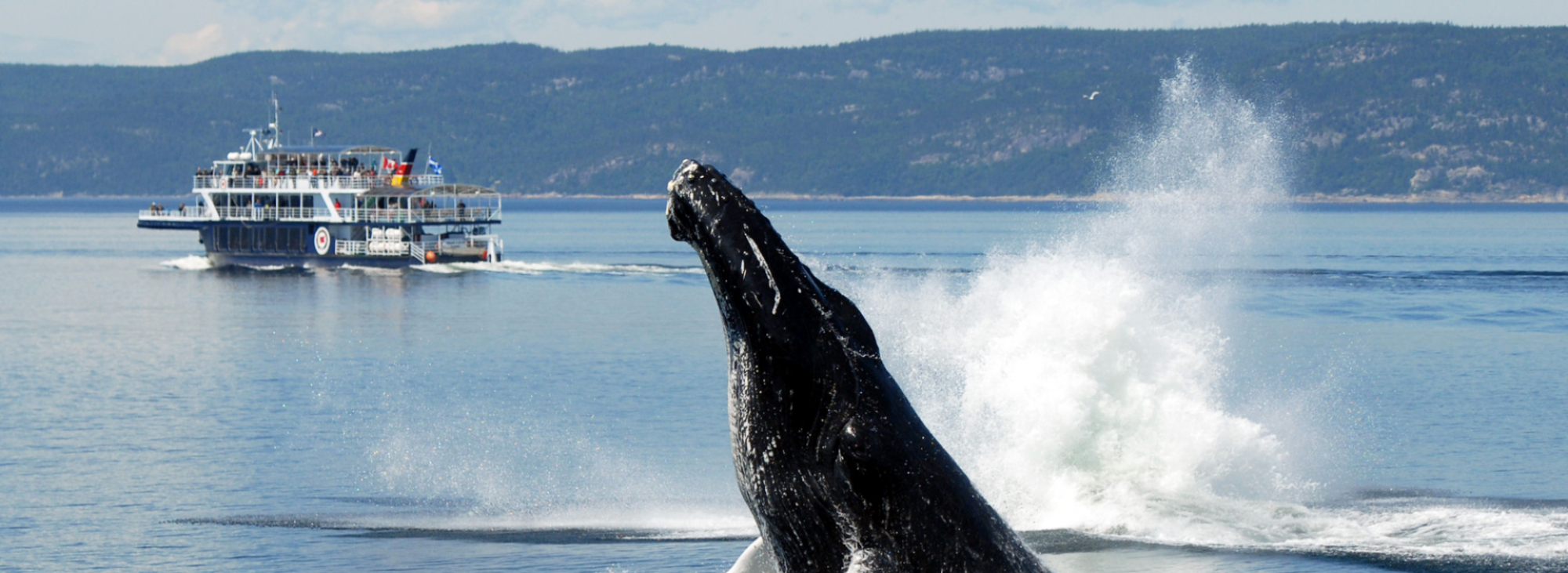
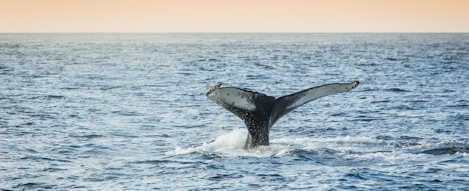
2. Humpback whale – 11 to 13 metres, 25 to 30 tonnes
The best known of the large cetaceans, humpbacks show their tails with every dive.
3. North Atlantic right whale – 10 to 15 metres, 30 to 60 tonnes
The North Atlantic right whale is the quintessential whale, just as you imagine it: round and chubby! Once heavily hunted, some 300 survivors are left in the North Atlantic. Note that right whales are on the list of endangered species.
4. Fin whale – 18 to 21 metres, 40 to 50 tonnes
A few dozen fin whales—the world’s second largest animals—can be spotted in the St. Lawrence Estuary every summer.
5. Blue whale – 21 to 26 metres, 80 to 210 tonnes
Only a few hundred blue whales—the largest animals on the planet—still exist. The St. Lawrence is one of the rare places in the world where they can be observed near the shore.