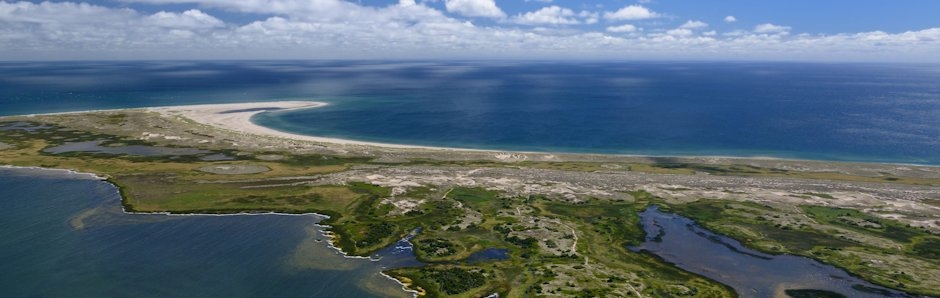
Bird Watching in the Îles de la Madeleine

| 4 days | Îles de la Madeleine

Number of species: 341
Number of globally threatened species: 19
Number of extinct species: 1
Number of introduced species: 3

Source: Avibase – The World Bird Database

Flagship species

Piping plovers are a globally threatened species. In Québec, they nests on the beaches surrounding the Îles de la Madeleine and can be observed from late April to mid-August.

The Îles de la Madeleine archipelago is home to hundreds of bird species. The following are a few of the region’s most popular bird-watching sites.

Travel Itinerary

Grosse Île Island

1

Pointe-de-l’Est National Wildlife Area

Covering an area of 684 hectares (1690 acres), this wildlife area includes examples of typical elements of the archipelago’s landscape: dunes, ponds, marshes and a forest of stunted trees. The site is therefore a prime habitat for several species of birds, including horned grebes, black-headed gulls, American bitterns, fox sparrows and black guillemots, as well as being an important spring migratory stopover. To observe birds here, follow one of the two nature interpretation trails, which you can explore on your own or with a guide. The trailheads are located along Route 199, between the villages of Grosse-Île and Old Harry.

Pointe aux Loups Island and Cap aux Meules Island

2

Dunes between Pointe-aux-Loups and Grosse-Île

During the migration period, drive along Route 199 at low tide between Pointe-aux-Loups and Grosse-Île. Thousands of sandpipers, yellowlegs and plovers come to feed in this sector. On the water, you can observe double-crested cormorants, great black-backed gulls and herring gulls. Keep your eyes peeled and you may even spot a snowy owl or rough-legged hawk on the dunes or hydro poles!

L’Étang à Ben (Ben’s Pond)

In the village of L’Étang-du-Nord, Chemin du Rivage runs alongside L’Étang à Ben (Ben’s Pond), which attracts large numbers of birds. Many species can be observed here, including great blue herons, pied-billed grebes, belted kingfishers, bank swallows, short-eared owls and various waterfowl. This site is also a staging area for brants during the spring migration.

Parc de Gros-Cap

Located on the Gros-Cap Peninsula and accessible via Chemin du Camping, Parc de Gros-Cap offers trails along the red cliffs where you can observe several bird species, including belted kingfishers, bank swallows, black guillemots, common terns, Bonaparte’s gulls, greater yellowlegs, semipalmated plovers and whimbrels.

Entry Island

3

Entry Island is the only inhabited island in the archipelago that is not linked to the others by sand dunes. To get there, you have to take the MV Ivan-Quinn ferry or an excursion boat. To observe birds on the island, head to the Ivan Quinn trail, which leads to Big Hill—the archipelago’s highest peak—and the community pasture. Marine species you are likely to see include black-legged kittiwakes, great cormorants, double-crested cormorants, razorbills and black guillemots.

Havre Aubert Island

4

Havre-aux-Basques lagoon

Between the islands of Cap aux Meules and Havre Aubert, the water level dropped significantly when Route 199 was built, which created small islets that are now used by waterfowl as nesting sites. Colonies of black-headed gulls and Bonaparte’s gulls also nest here, as do piping plovers, a threatened species. During the migration period, shorebirds take advantage of the lower water levels to seek food on the mudflats.

Pointe-des-Canots and Dune de l’Ouest

Pointe-des-Canots and Dune de l’Ouest can both be reached by following Chemin du Bassin and Chemin de la Montagne on Havre Aubert Island. From there, two unpaved roads (Chemin de la Pointe-des-Canots and Chemin de la Dune de l’Ouest) lead to the observation sites. Pointe-des-Canots is a good place to observe forest birds, shorebirds and waterfowl. Mergansers are often sighted here, as are rough-legged hawks. The pond at Dune de l’Ouest is home to common loons and pied-billed grebes, while the grasslands surrounding it are prime habitat for short-eared owls and Nelson’s sparrows.

For more information about birds on the Islands, visit Tourisme Îles de la Madeleine.