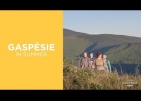
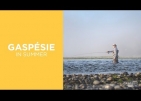
Early on in its history, Gaspésie became a must-see destination thanks to its picture-perfect landscapes and its warm and friendly people, who form a truly multicultural mosaic. See for yourself how this tradition of hospitality continues today! |  Visit Gaspésie |
A must-see destination
In the history of tourism in Québec, Gaspésie is identified as one of the first widely known tourist destinations. Beginning in the 19th century,
Percé—and legendary Percé Rock—as well as Carleton and Métis were the first resort areas to welcome a middle-class clientele, who enjoyed salmon fishing and the seaside. The
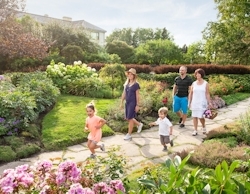
Reford Gardens evoke this era in an exhibit showcased in the Estevan Lodge.
A region of sea and mountains, Gaspésie is ideal for
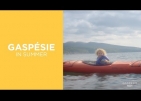
sea kayaking and
scuba diving, as well as short or long
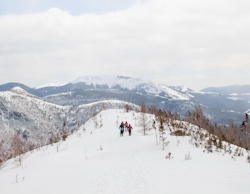
hikes and
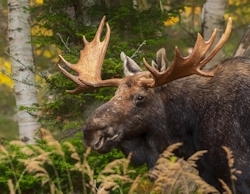
cycling excursions. In addition, this region offers excellent opportunities for moose and caribou observation as well as
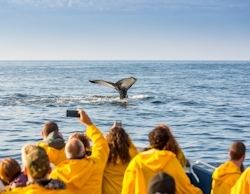
whale and
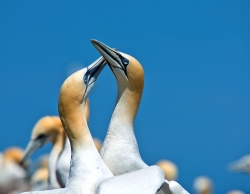
bird watching from land or at sea.
Picture-perfect landscapes

A long peninsula bathed in the waters of the Estuary and Gulf of St. Lawrence, Gaspésie charms its visitors with its contrasting landscapes ranging from undulating countryside to mountains overlooking the sea. In fishing and agricultural villages and small, dynamic towns built at the mouths of rivers, local residents have carved out a place for themselves in this region while preserving the natural world around them.
Gaspésie has a population of slightly over 145,000 residents spread out along the coast and in the Matapédia Valley. The main road, Route 132, which forms a loop of about 900 kilometres (560 miles), is a world-renowned scenic drive (the
Gaspésie Tour), recently mentioned in the
Michelin Green Guide and
National Geographic Traveler.
An exceptional natural environment
The natural heritage of Gaspésie is truly exceptional: this region is home to
one of
the most beautiful bays in the world,
Chaleur Bay, and
Miguasha National Park, a
UNESCO World Heritage Site, as well as three other national parks (
Gaspésie National Park,
Forillon National Park of Canada and
Bonaventure Island and Percé Rock National Park).
Hikers can explore the wild beauty of the region along the 644 kilometres (400 miles) of the
International Appalachian Trail, which runs from Matapédia all the way to Cap-Gaspé in Forillon National Park of Canada.
A multicultural mosaic
A welcoming land, Gaspésie has been shaped by the cultures and traditions of its various founding peoples. The region is characterized by a blend of ethnic, cultural and religious traditions that is unique in Québec. Gaspesian culture can be appreciated today in the architecture of the houses, the churches of various denominations, the many gardens and the arts; it can also be heard in the accents, vocabulary and songs of the various communities that make up modern Gaspésie. A number of historic sites, museums and interpretation sites celebrate the history and talent of the current and past Gaspesians.
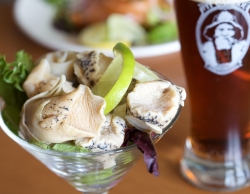
Gaspesian culture can also be experienced through local cuisine and regional arts and crafts. Gourmets will particularly appreciate the subtle and highly prized flavours of lobster, snow crab, northern shrimp, fresh fish and other local delicacies. Finally, boutiques, studios and art galleries will introduce visitors to artists and artisans who invent new and refreshing worlds using age-old techniques and products.