Wildlife Species
The many habitats and ecosystems found in the maritime regions of Québec support a great diversity of wildlife species, many of which you can observe in their natural habitats. Here is a selection of the most fascinating wildlife species found in our regions.
Marine Mammals
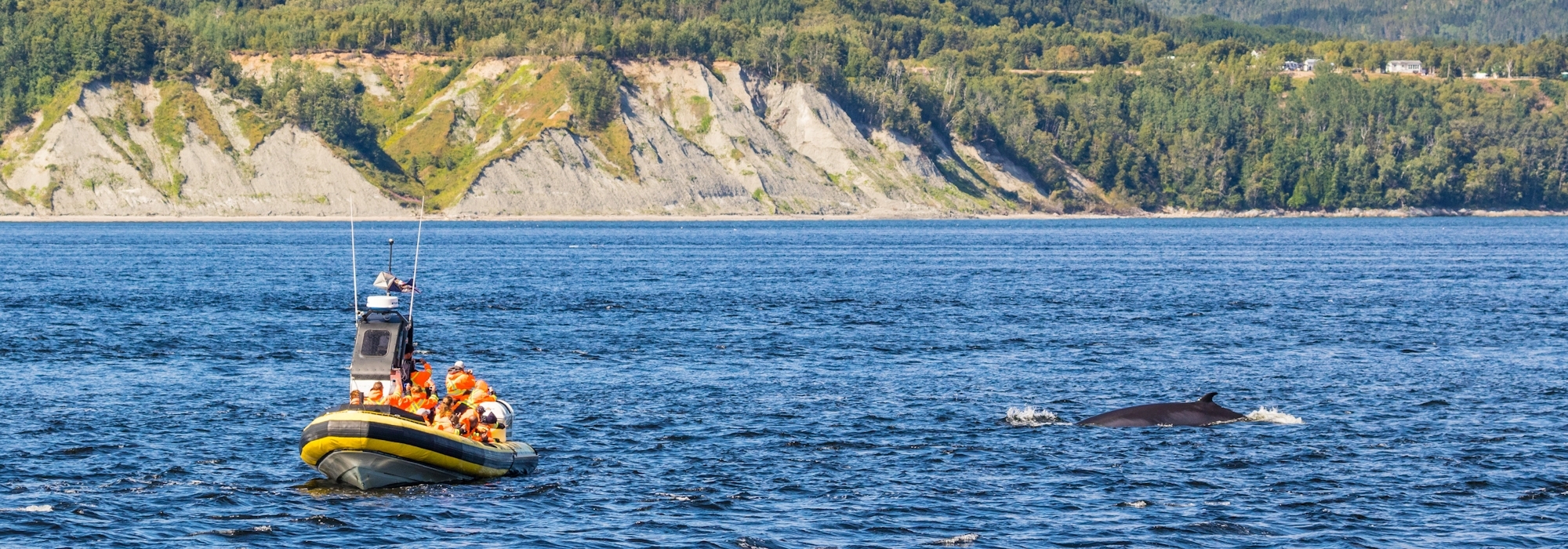
Every year, 13 species of whales frequent the waters of the Estuary and Gulf of St. Lawrence. This is why the Côte-Nord coastline from Tadoussac to Blanc-Sablon has been designated the Whale Route. To find out more about these marine mammals, visit our Whale Watching section.
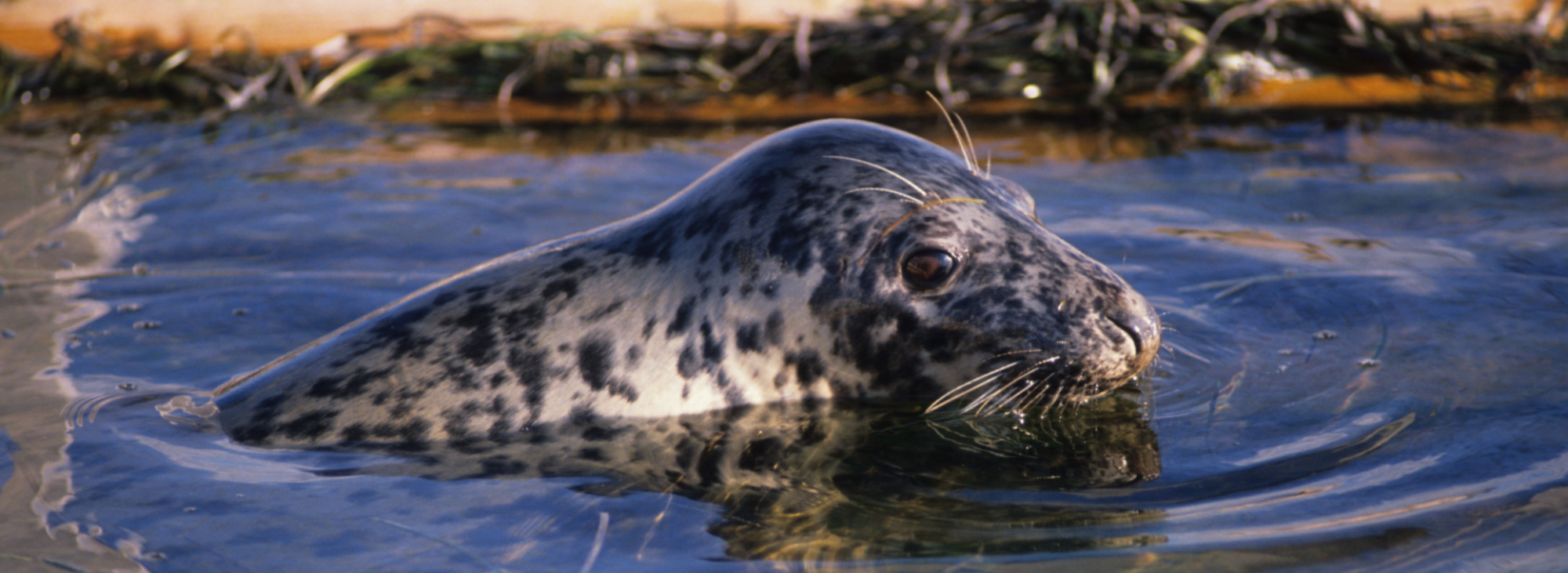
Four species of seals can also be found in our waters:
- Harbour seals: About 2000 live in the Estuary and Gulf of St. Lawrence. The smallest of the four species, they are also the only seals to overwinter in our waters.
- Grey seals: About 3000 are found in the Estuary and Gulf of St. Lawrence. The largest of the four species, grey seals are increasing in number.
- Hooded seals: About 600,000 are found mostly in the Gulf of St. Lawrence.
- Harp seals: About 6.8 million can be found in the Eastern Atlantic. By far the most numerous seal species, they are also the best known since thousands of adult females make their way to the ice surrounding the Îles de la Madeleine every winter to give birth to their pups.
Seals are easily observable from the shore from a respectful distance or during sea excursions—they are curious animals that will often approach visitors. Parc national du Bic offers at least three activities that focus on the harbour seal, which is also the park’s animal emblem.
Land Mammals
Large and small land mammals are numerous throughout the maritime regions of Québec, except in the Îles de la Madeleine where they are relatively rare.
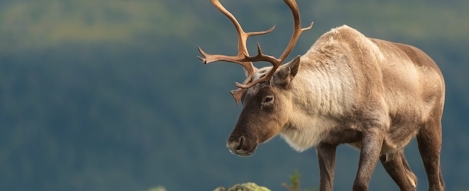
- Caribou: Parc national de la Gaspésie is home to the only caribou herd south of the St. Lawrence. A population of over 400,000 caribou also lives in the Fermont area, in Côte-Nord.
- Moose: The largest member of the deer family is the king of the forests of Eastern Québec. The moose population has reached an exceptional density in the Réserve faunique de Matane, where a moose interpretation centre as well as a wide range of observation and interpretive activities will introduce you to this unique animal.
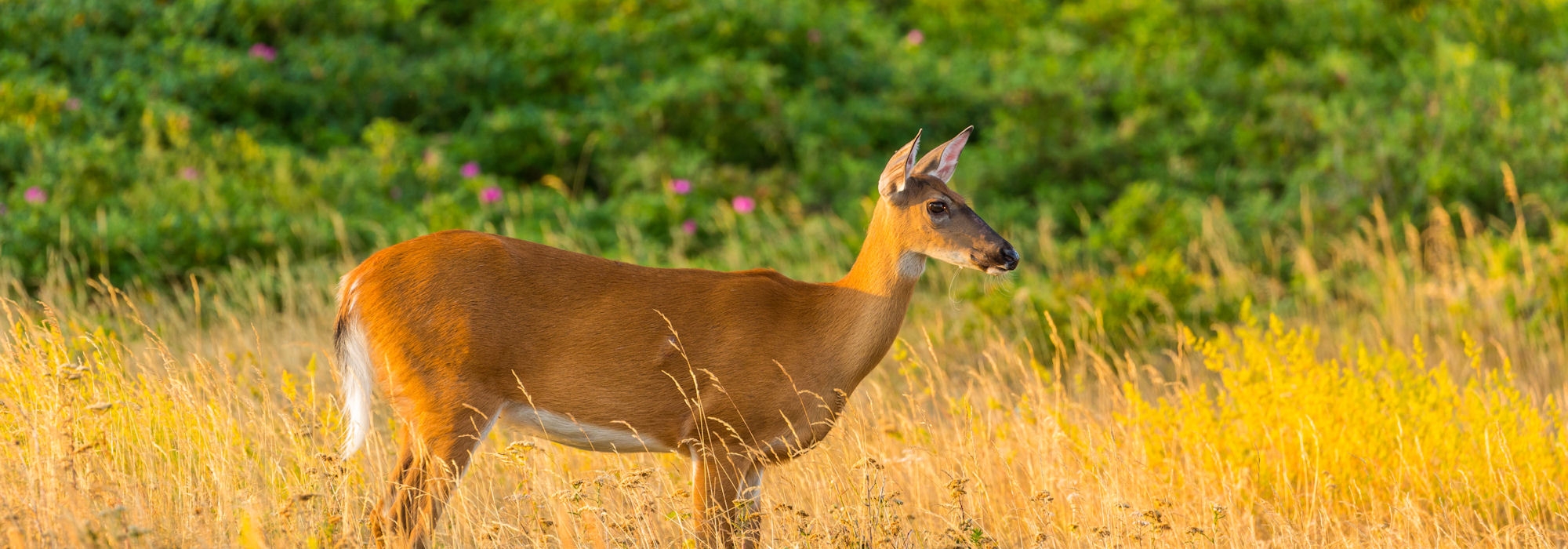
- White-tailed deer: While white-tailed deer can be found in the forests of Bas-Saint-Laurent and Gaspésie, the largest population lives on Anticosti Island (in Côte-Nord). Introduced in 1896 by Henri Menier, who owned Anticosti at the time, white-tailed deer have now reached a population of 115,000 animals on a territory of about 8000 km² (3000 sq. mi.) with a human population of 240!
- Black bears: Black bears are found in many of the forests of Eastern Québec. Although encounters with humans are rare, if you do see a black bear, back away slowly while making sure it is aware of your presence. Black bears are shy but may become aggressive if they feel threatened. In Côte-Nord, they can be observed at close range and in complete safety in the company of an experienced guide.
Birds
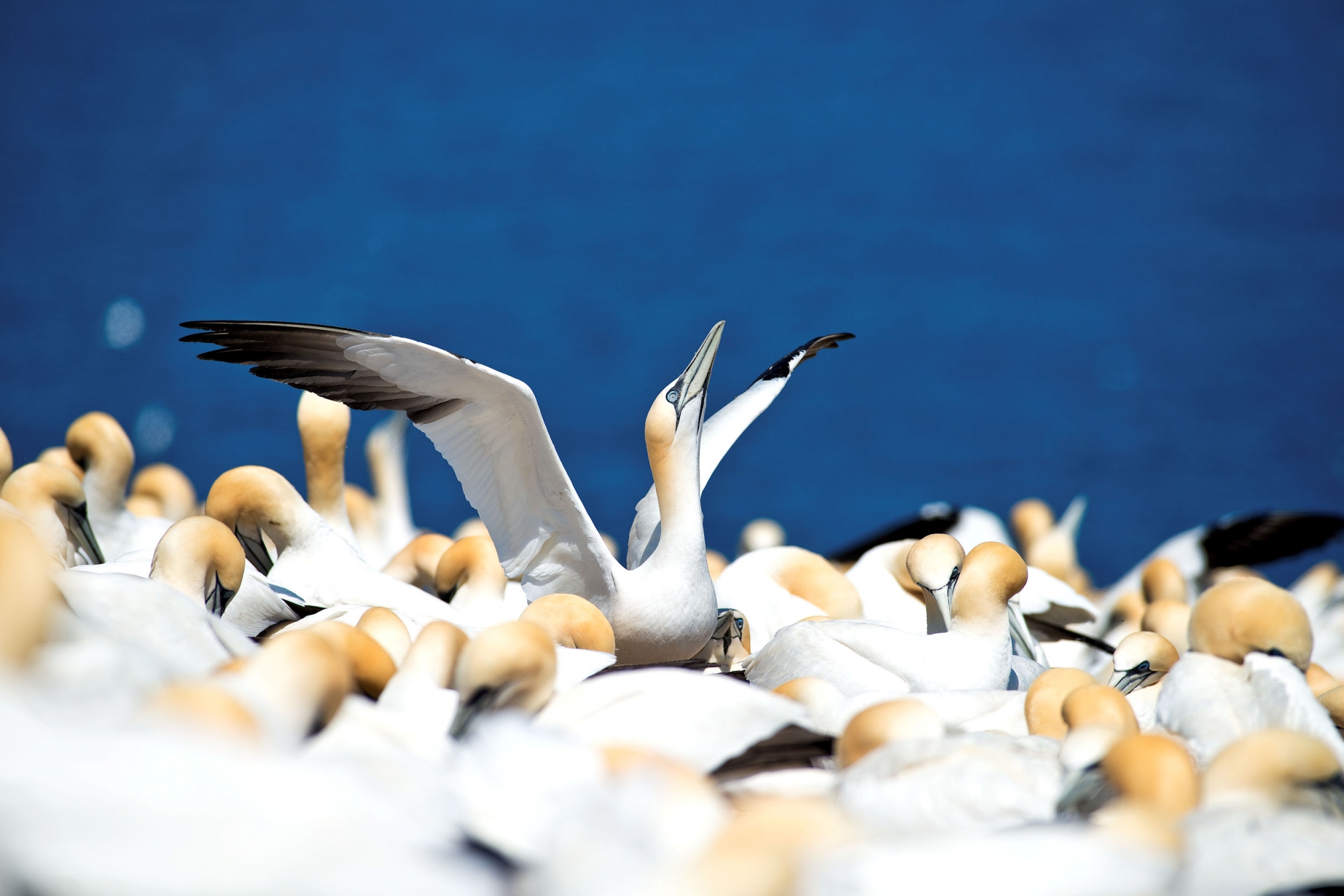
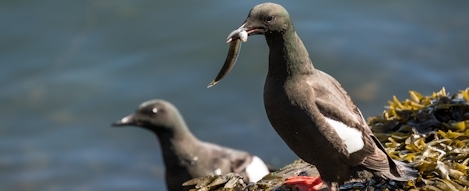
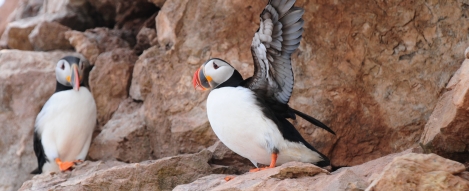
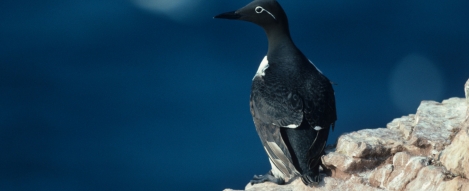
Thousands of species of birds are found in the maritime regions of Québec, including northern gannets, Atlantic puffins and common eiders. Visit our Bird Watching section for more information.
Fish and Crustaceans
In the maritime regions of Québec, aquatic habitats are as diverse as terrestrial ones. The St. Lawrence can be divided into three distinct sectors—the river, estuary and gulf—that are home to completely different species. A multitude of rivers and lakes also provide rich habitats for aquatic life.
Saltwater species
Many saltwater fish and crustaceans inhabit the waters of the maritime regions of Québec, to the delight of seafood lovers. These species include snow crab, lobster and northern shrimp, as well as mackerel, herring and halibut.
Exploited for over 400 years in the St. Lawrence Estuary, American eel is still fished commercially today. Rivière-Ouelle is the eel fishing capital of Québec. Fish weirs (the traps used to catch the eels) are built along the shores of the estuary in Kamouraska and are unique local tourist attractions.
Freshwater species
Although they spend part of their lives in salt water, Atlantic salmon spawn in the fresh waters of rivers where they provide anglers with an exciting challenge. Visit the salmon observation centre in Matane to learn about the king of our rivers and observe salmon making their way upstream. The maritime regions of Québec have many salmon rivers, including some of the most renowned in the world. For more information, visit www.saumonquebec.com (in French only).