The Québec maritime Blog

-
Parc national du Bic, Bas-Saint-Laurent
Mathieu Dupuis
Hiking in Bas-Saint-Laurent: 9 Sites Worth Exploring
Is your trip to Eastern Québec coming up soon and you’re still looking for outdoor activities to add to your itinerary? Then keep reading! Hiking is a great way to discover local plants and wildlife while soaking up incredible scenery.
An ideal place to go hiking, Bas-Saint-Laurent is located along the south shore of the St. Lawrence Estuary. Home to islands, tidal flats and national parks, this region offers a multitude of breathtaking panoramic views. Follow the guide below and discover Bas-Saint-Laurent on foot as you explore these nine iconic sites.
The best places to go hiking in Bas-Saint-Laurent

No matter if you’re a seasoned hiker or a casual weekend walker, you’re sure to fall in love with the region of Bas-Saint-Laurent! Here are our top picks for places to go to explore and get away from it all, whether you’re looking for easy trails to discover with your family or more challenging routes that are suitable for those with energy to spare!
1. Société d’écologie de la batture du Kamouraska (SEBKA)
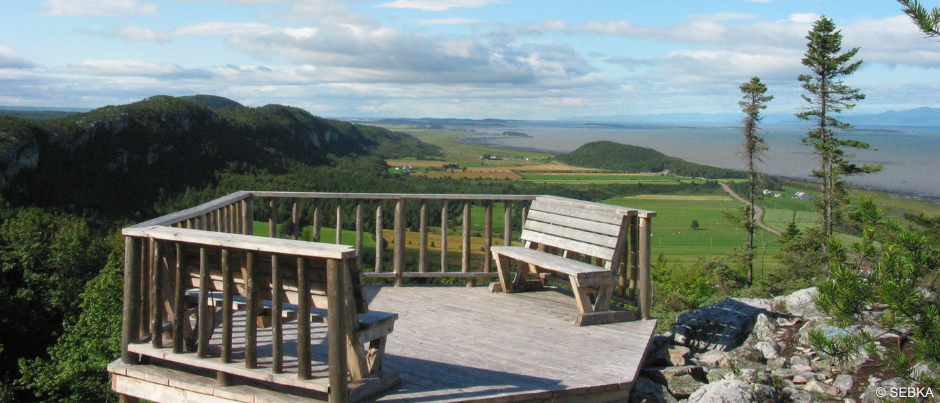
The SEBKA park in Kamouraska offers over 10 km (6 mi.) of hiking trails through the forest or along the shores of the St. Lawrence across two areas linked by the Batture trail. Don’t miss the climb to the top of the Cabourons to admire a stunning forest of bonsai-like jack pines as well as magnificent views of the sea, the fields and the hills rising from the plains. This 8.5-km (5-mi.) loop is an intermediate trail and definitely worth the detour.
Practical info: The SEBKA trails are open during the summer, and park entry fees apply. Please note that dogs are not allowed on site.
2. Parc de la Pointe
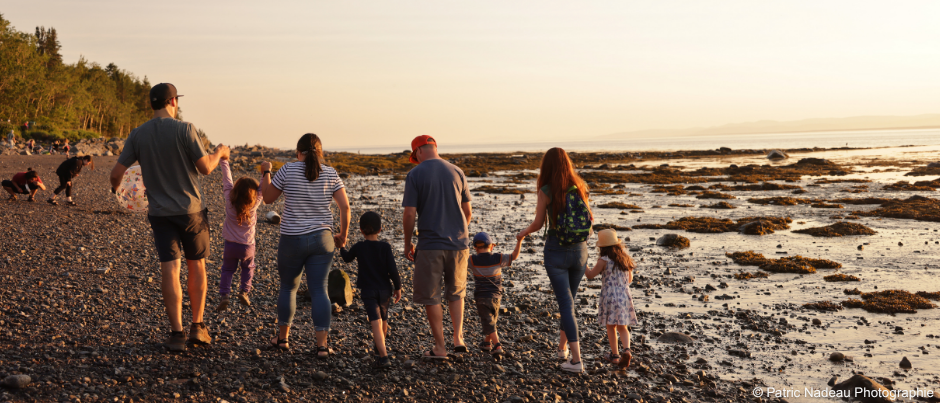
Located in Rivière-du-Loup along the St. Lawrence, Parc de la Pointe is a spot you must visit to stretch your legs. The park’s paved path is suitable for all levels. Running along the water for 2.5 km (1.5 mi.), it offers stunning views of the sea and charming villas built at the turn of the 20th century.
The park is a great place to admire some of the most beautiful sunsets in the world. Interpretive panels, digital content and an audio tour (in French only) recount local history as you walk along the trail.
Practical info: The park is open year-round. Admission is free.
3. Île aux Lièvres
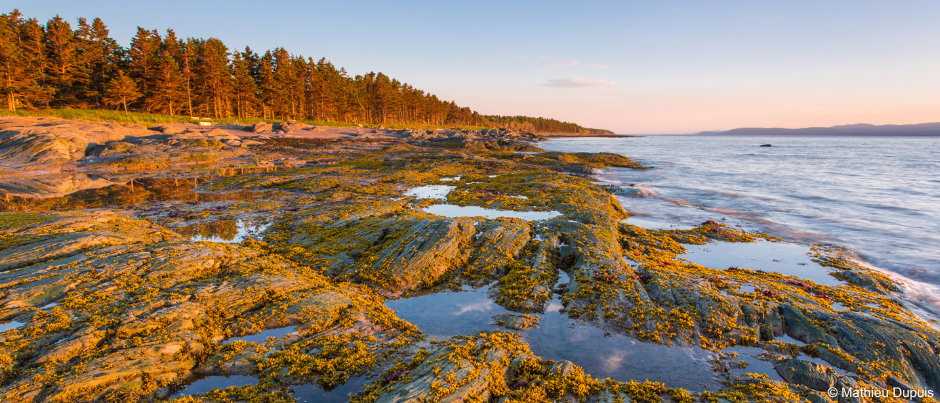
Located off the coast of Rivière-du-Loup in the St. Lawrence Estuary, Île aux Lièvres is a stunning hiking destination. The island is 13 km (8 mi.) long and offers a network of 45 km (28 mi.) of trails suitable for all levels, from beginner hikers to seasoned adventurers.
Along the trails, you’ll find scenic lookouts, deserted beaches and rocky outcrops, in addition to opportunities to observe seals and seabirds in their natural habitat. To get to the island, you must take a boat from Rivière-du-Loup with Société Duvetnor (reservations required). You can also extend your stay by spending the night at the Auberge du Lièvre inn, in a cottage or at a campsite.
Practical info: The trails are open from late May to late September. A charge applies for the boat trip.
4. Parc côtier Kiskotuk

Located along the coast in Cacouna, Parc côtier Kiskotuk is a vast natural area that can be explored via 10 km (6 mi.) of hiking trails through a variety of landscapes, including salt marshes, the boreal forest and mountains, with views of the St. Lawrence. The park offers several different sectors to explore, making it perfect for family outings or contemplative walks.
The trails are open to dogs on leashes and offer opportunities to observe wildlife, including the many birds that inhabit these rich ecosystems.
Practical info: The park is open from mid-May to late October. Access to the trails is free.
5. Putep ’t‑awt marine mammal observation site
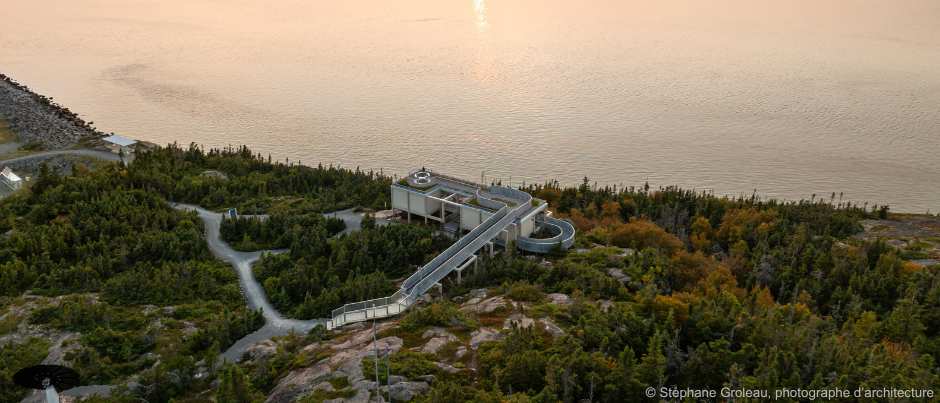
The Putep ’t‑awt marine mammal observation site offers a unique experience in Cacouna combines hiking with cultural discovery. Putep ’t-awt means “whale trail” in the Wolastoqey language and refers to a 2-km (1.2-mi.) walking trail dotted with interactive interpretive panels about the culture of the Wolastoqiyik Wahsipekuk First Nation and the marine ecosystem.
Perched on Gros-Cacouna Mountain, the trail leads to an observatory offering magnificent panoramic views of the St. Lawrence, the natural habitat of belugas and other marine wildlife species. The hike isn’t very long, but some sections of the trail are intermediate with some elevation gain.
Practical info: The site is open from May to October, and admission is free.
6. Parc national du Bic

Located about 20 km (12.5 mi.) from downtown Rimouski, Parc national du Bic is a natural playground featuring a spectacular mosaic of headlands, coves, islands and bays along the St. Lawrence. Enjoy beautiful hikes on 25 km (15.5 mi.) of marked trails along the water’s edge, through the forest and up to lookouts offering postcard-worthy views, particularly at the top of Pic Champlain.
While hiking you’re likely to spot seals and seabirds, which is sure to delight visitors of all ages!
Practical info: The park is open year-round, and entry fees apply. We recommend you purchase your daily access pass online before your visit.
7. Saint‑Barnabé Island
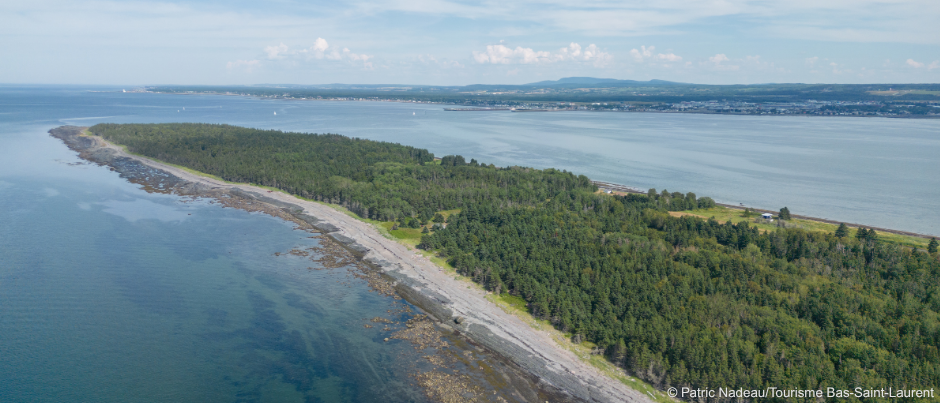
Located off Rimouski, Saint-Barnabé Island offers visitors a unique hiking experience via forests, rocky shores and beaches. The marked trails, which range in length from 3 km (2 mi.) to 12 km (7.5 mi.) depending on the loop you choose, will give you opportunities to spot over 70 species of birds while enjoying breathtaking views of the St. Lawrence.
A Zodiac will take you to the island from the Rimouski marina. You can also camp on site for a fully immersive experience! However, strollers, bicycles and pets are not allowed on the island.
Practical info: The island is accessible from mid-June to late September, with daily departures during high season. As of September 3, departures are offered from Thursday to Sunday. We recommend you book your excursion online before your visit.
8. Hell’s Gate Canyon
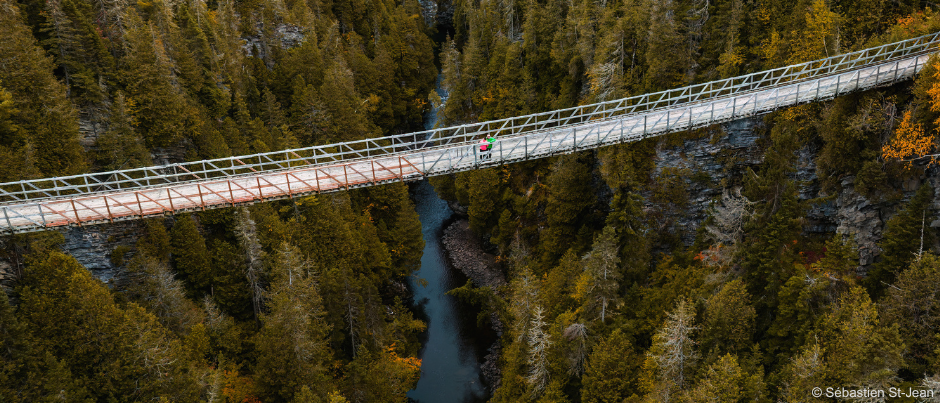
Hell’s Gate Canyon, which is located on the Terfa site in Saint-Narcisse-de-Rimouski, is one of the main natural attractions in Bas-Saint-Laurent. A network of over 20 km (12.5 mi.) of trails allows visitors to discover the Grand Sault waterfall as well as Québec’s highest suspension bridge, which is 63 metres (205 feet) high and overlooks the canyon, which is 5 km (3 mi.) long and has steep rock walls that are up to 90 metres(295 fee) high!
If you’re feeling brave, you’ll want to explore the Draveur trail and set off down the 300-step staircase known as the Descent into Hell—but keep in mind that you’ll have to walk back up all those steps! The site also offers two immersive multimedia trails, the Devil’s Road and the Gates of Oniria, which will add a touch of magic to your hiking adventures.
Practical info: The site is open from mid-May to late October, and entry fees apply.
9. Parc national du Lac‑Témiscouata

Parc national du Lac-Témiscouata protects a large portion of the shores of Lake Témiscouata, one of the largest lakes in Bas-Saint-Laurent, which was created by the power of glaciers. Offering 38 km (23.5 mi.) of hiking trails, the park promises unforgettable moments in nature surrounded by water and forest!
I highly recommend the Montagne-du-Fourneau trail, a 5.8-km (3.5-mi.) intermediate loop that will take you through an exceptional forest ecosystem of red and white pine via incredible views of Lake Témiscouata. With a bit of luck, you’ll also spot a variety of wildlife species, including white-tailed deer, moose, beavers and bald eagles, Canada’s largest birds of prey!
Practical info: The park is open year-round and is accessible via the Saint-Michel-du-Squatec, Saint-Juste and Dégelis sectors. In the summer, you can also access the park by water shuttle from Témiscouata-sur-le-Lac (Cabano). Entry fees apply. We recommend you purchase your daily access pass online before your visit.
The right gear for hiking in Bas-Saint-Laurent
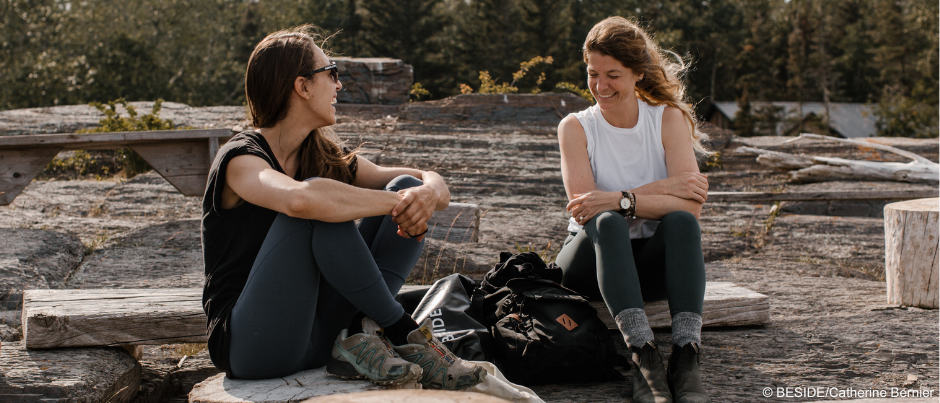
To make the most of your hiking experience in Bas-Saint-Laurent, it’s important to have the right gear! In addition, be sure to check the weather forecast before you set out. Here’s a list of all the essentials:
- Appropriate footwear: to be able to hike on varied terrain, which may be rocky or wet
- Hiking poles: to assist with ascents and help you maintain your balance on descents
- Windbreaker or rain jacket: it can be windy along the coast and may rain
- Water, snacks and a picnic lunch: some trails are remote and lack amenities
- Sunscreen and insect repellent: to protect you from UV rays and biting insects
- Small first-aid kit: it’s always best to be prepared!
- Binoculars: to observe birds and marine mammals
So now you know the best places to go hiking in Bas-Saint-Laurent! For more tips about travelling in Eastern Québec, sign up for our newsletter, and if you’d like to enjoy outdoor adventures in any of our other maritime regions, be sure to read our blog posts about hiking in Gaspésie, Côte-Nord and the Îles de la Madeleine. Finally, if you know of any other hidden gems to recommend, please share them in the comments below!
If you liked this article, you might also like...
Author Lola Linard

An SEO web editor with a nomadic spirit, Lola Linard has long followed her explorer’s heart. Living abroad in Japan, Slovenia and the U.S. sharpened her taste for discovering the unknown, meeting new people and immersing herself in nature. Today, whether she’s rediscovering France or setting off on remote adventures, she always travels with the same sense of wonder. As someone who loves Québec and the sea, she finds so many things to thrill her in the maritime regions of Québec: the salty sea air, pristine natural environments and the exhilarating feeling of being exactly where she’s meant to be. Writing about these regions is a way of prolonging the adventure and inviting others to experience it for themselves.
(1) comment
Genie Abrams
This makes me eager to visit and hike in all these places! Wish i knew of any inns or B&Bs there and also any restaurants.
Bonjour, there are several accommodation possibilities near all theses exceptional sites, here would be some examples of inns in the area, with restaurants on site : SEBKA / Kamouraska : Auberge comme au Premier Jour Parc national du Bic : Auberge du Mange-Grenouille Par national du Lac-Témiscouata : Auberge du Chemin Faisant Feel free to have a look at the different options on our dedicated page : https://www.quebecmaritime.ca/en/where-to-stay/hotel-establishments#1/0 Greetings from Québec by the sea, Mélodie