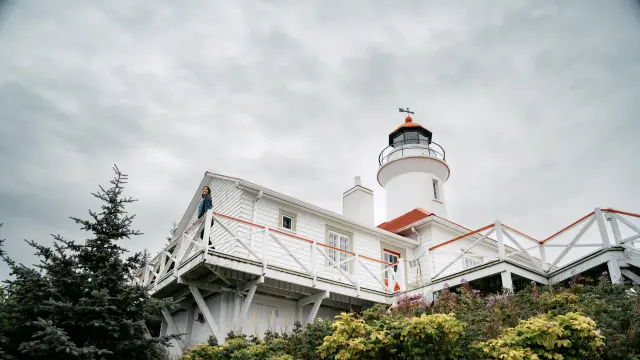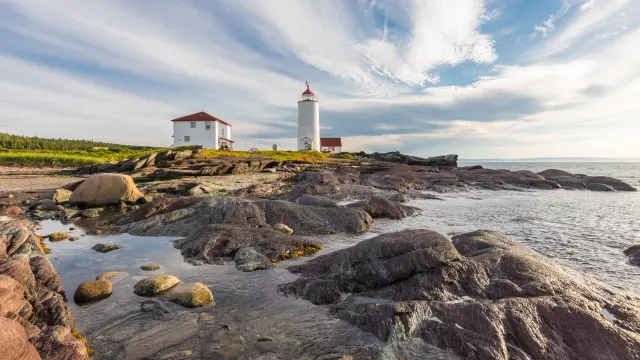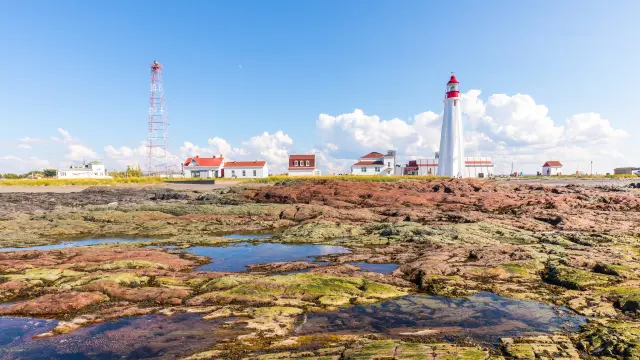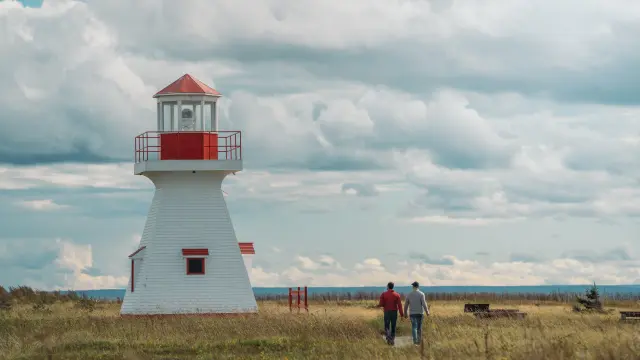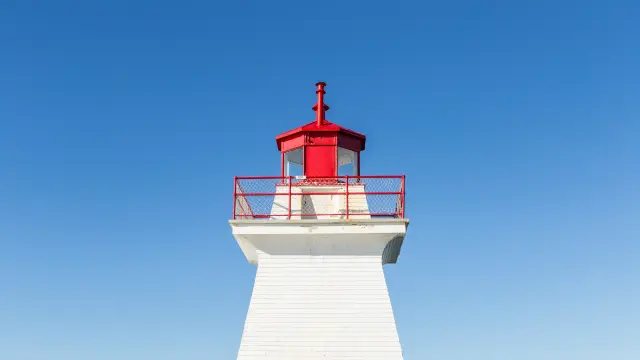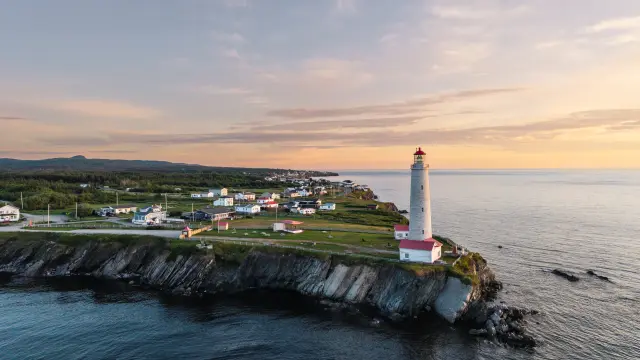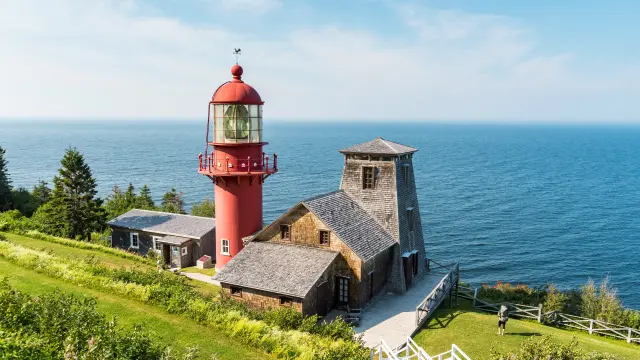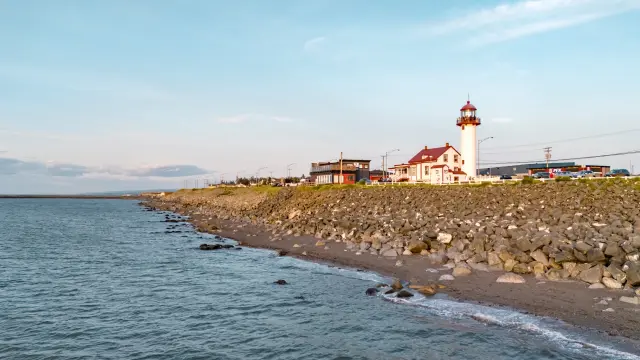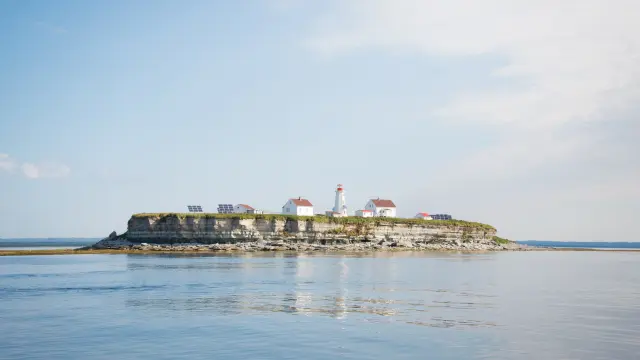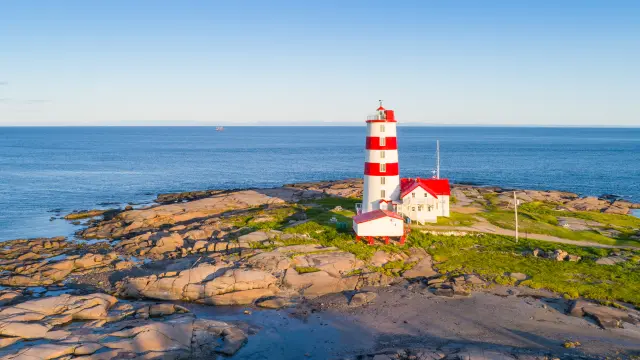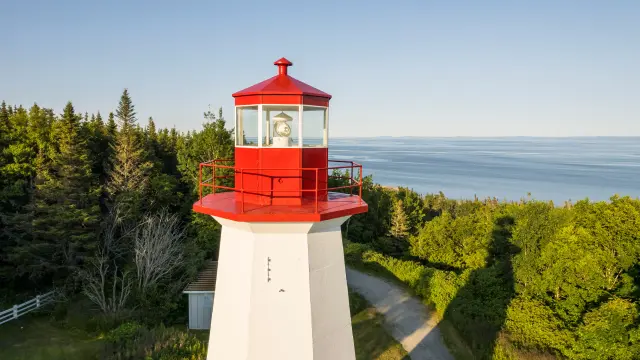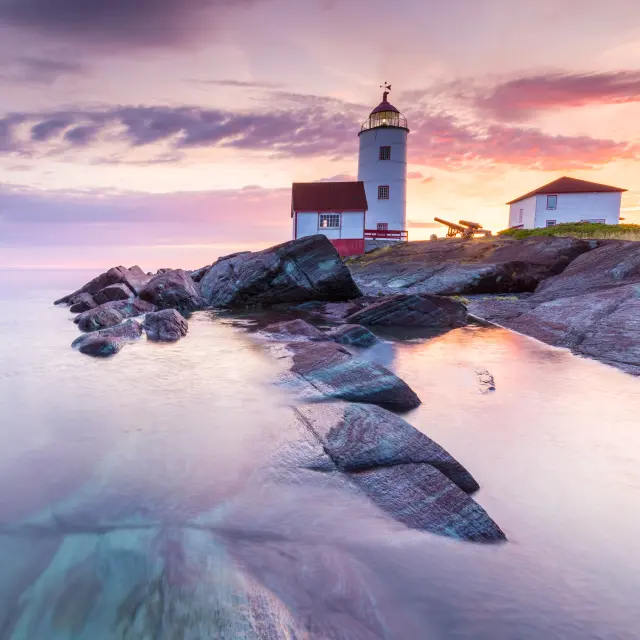
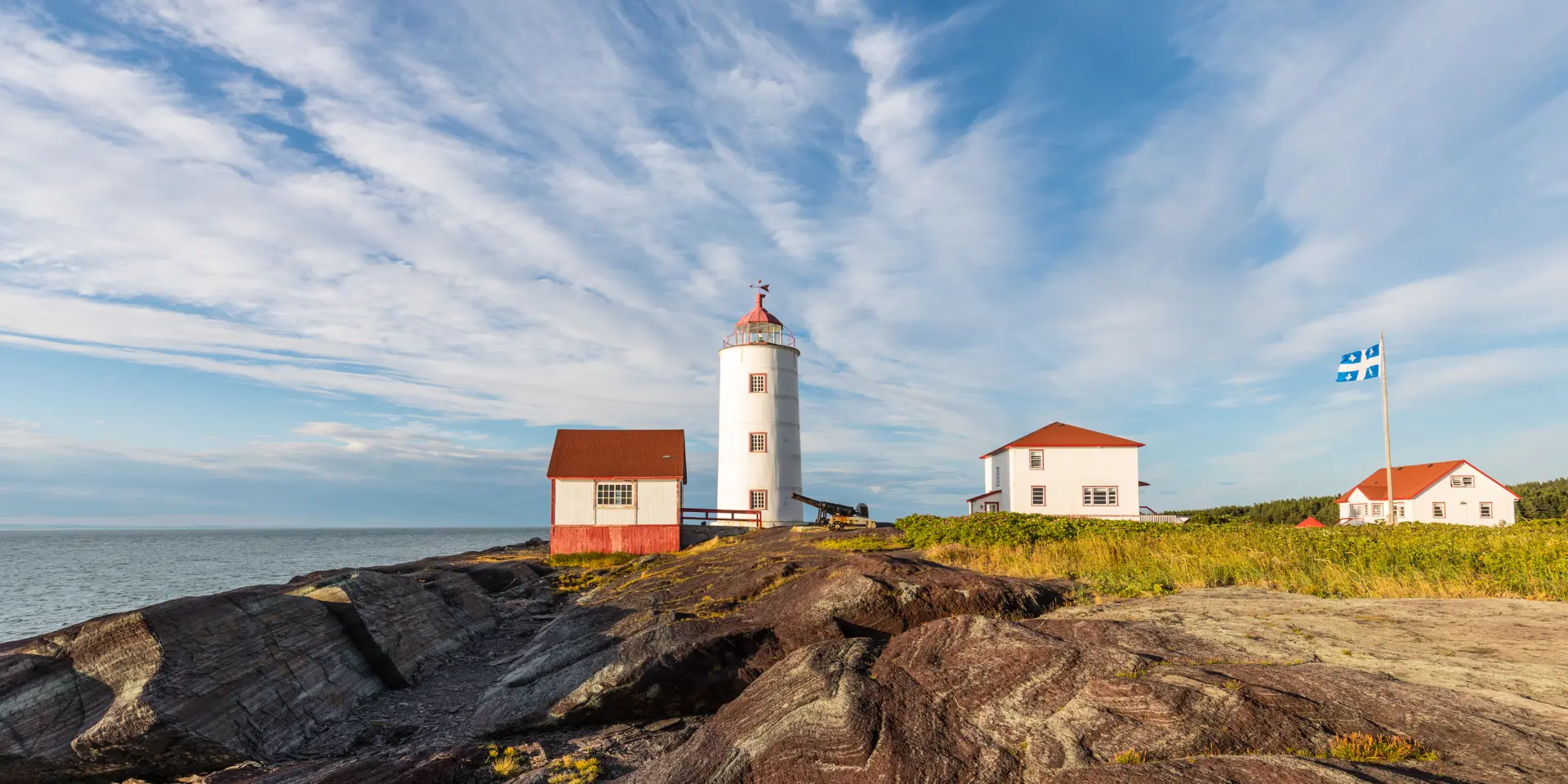
Exterior view of the Île Verte lighthouse near Rivière-du-Loup, Bas-Saint-Laurent
©

Île Verte lighthouse, Bas-Saint-Laurent

|

Mathieu Dupuis

The St. Lawrence Lighthouse Trail

14 days | 2020 km (1255 mi.) + 3 h 20 by boat  Rivière-du-Loup to Tadoussac

We inhabit a land of the sea where lighthouses are as much a part of our landscapes as they are symbols of our heritage. Once sentinels of our shores, they are now guardians of our maritime culture. Of the more than 40 lighthouses that dot our coasts, 18 offer tourism activities or services to the public, and many others can be admired from the outside. All provide visitors with opportunities to discover history and architecture in a new way. Some of our lighthouses or their outbuildings even offer accommodations. While they are considerably more comfortable than they were in the days of the lightkeepers, they have all maintained an authentic atmosphere.

Whether you tour an exhibition on your own or with a guide, spend the night in a lighthouse or enjoy a meal overlooking the sea, let these sites steeped in mystery reveal their many secrets to you!

This 14-day itinerary will take you along Route 132 and Route 138 to discover the lighthouses of Bas-Saint-Laurent, Gaspésie and Côte-Nord. Note that the Îles de la Madeleine are home to 6 lighthouses, 4 of which are easily accessible to the public. Only one of these lighthouses remains in use.

For more information, visit the Route des Phares website (in French only).

Plan interactif : 12 lieux répertoriés.

  • Lieu sans nom
  • Lieu sans nom
  • Lieu sans nom
  • Lieu sans nom
  • Lieu sans nom
  • Lieu sans nom
  • Lieu sans nom
  • Lieu sans nom
  • Lieu sans nom
  • Lieu sans nom
  • Lieu sans nom
  • Lieu sans nom

Plan interactif : 13 lieux répertoriés.

  • Rivière-du-Loup
  • Rivière-du-Loup to Verte Island
  • Verte Island to Rimouski
  • Rimouski to New Richmond
  • New Richmond to Percé
  • Percé to Gaspé
  • Gaspé to Cap-Chat
  • Cap-Chat to Matane
  • Matane to Havre-Saint-Pierre
  • Havre-Saint-Pierre
  • Havre-Saint-Pierre to Sept-Îles
  • Sept-Îles to Baie-Trinité
  • Baie-Trinité to Tadoussac

Day 1 Rivière-du-Loup

Pot à l’Eau-de-Vie Lighthouse
Located in the Pot à l’Eau de Vie Archipelago off the coast of Rivière-du-Loup in Bas-Saint-Laurent, the Pot à l’Eau-de-Vie Lighthouse has been completely renovated, allowing you to spend the night in the middle of the St. Lawrence. Built in 1862, the lighthouse was abandoned in 1964 before being designated a federal heritage building in 1998 due to its unique architecture and location. Société Duvetnor now offers packages that include a guided sea excursion in the archipelago and a short hike on the island. You can also opt for a package that includes meals and an overnight stay in the lighthouse.

Other maritime attractions in the area 
Île aux Lièvres 
Société Duvetnor also invites you to explore about 45 km (30 mi.) of hiking trails on Île aux Lièvres, which is 13 km (8 mi.) long. You may spot seals at the eastern tip of this island, while the north side is an ideal place to observe minke whales, belugas and porpoises. If you want to spend the night here, you have several options: the inn in the lighthouse, cottages or wilderness campsites.

Day 2 Rivière-du-Loup to Verte Island 30 km (20 mi.) + 30 min by ferry

Île Verte Lighthouse
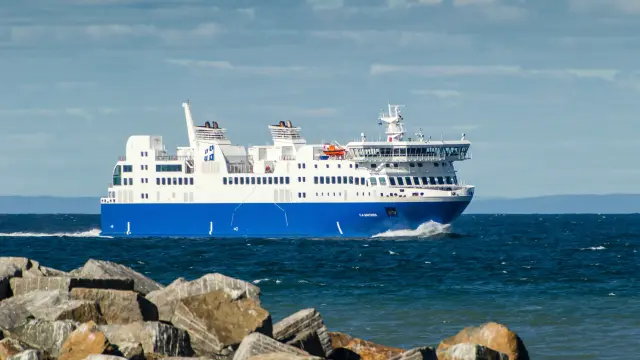
The first lighthouse built in Québec, in 1809, the Île Verte Lighthouse offers you a fascinating journey back in time. After the 30-minute crossing aboard the Peter-Fraser ferry departing from the village of L’Isle-Verte, hike to the other side of the island to visit the museum and discover the history of the lighthouse and the lives of the lightkeepers. From the top of the tower, which is 17 metres (56 feet) high, you can admire the light as well as an amazing view. Look towards Tadoussac to see if you can spot the Île Rouge and Haut-Fond Princelighthouses on the north shore of the St. Lawrence. To extend your stay, drop your bags in one of the lightkeeper’s houses and spend the night (or even several nights) on this island!

Other maritime attractions in the area 
Outdoor activities on Verte Island
Take advantage of your stay on Verte Island to enjoy various outdoor activities, including hiking and biking as well as wildlife and plant observation. Be sure to also visit the island’s other attractions: the École Michaud interpretation centre (located in a former country schoolhouse) and the skeleton museum. You will also find a restaurant (open in the summer only) and several other lodging options on the island.

Day 3 Verte Island to Rimouski 80 km (50 mi.) + 30 min by ferry

Pointe-au-Père Lighthouse 
“128 steps and over 100 years of history!” This is what the interpreter guide who will take you up this national historic site of Canada is likely to say as you admire the panoramic view from the top of the Pointe-au-Père Lighthouse before coming back down to visit the exhibitions found in the lightkeeper’s house. A witness to the tragic sinking of the Empress of Ireland ocean liner, which killed 1012 people in May 1914, the lighthouse is right next to the Empress of Ireland Museum, which commemorates this tragedy through an exhibition of artefacts as well as a 3D show about the shipwreck. On site, you can also visit the Onondaga, the first submarine open to the public in Canada, where you can learn about the daily lives of the crew members by listening to a fascinating audio guide (available in 4 languages).

Other maritime attractions in the area 
Parc national du Bic 
Visit Parc national du Bic, which will charm you with the variety of its landscapes. Observe plants and wildlife while enjoying outdoor activities (sea kayaking, hiking and biking) or retrace the history of the park by participating in various interpretive activities. On clear days, you can see the Bicquette Island Lighthouse from the top of Pic Champlain. You can also stay in the park in a cabin, at a campsite, in a glamping unit or even in a yurt.

Saint-Barnabé Island 
Located 15 to 20 minutes by Zodiac off the coast of Rimouski, Saint-Barnabé Island offers 20 km (12 mi.) of hiking trails that will give you the opportunity to discover local plants and wildlife, including great blue herons, the island’s flagship species. Walk the interpretive trail to learn about the human history of this island. You can also stay here in the evening to admire the sunset over the St. Lawrence and even spend the night at a wilderness campsite.

Day 4 Rimouski to New Richmond 285 km (175 mi.)

Pointe Mitis Lighthouse 
Before you head towards Chaleur Bay in Gaspésie, take a brief detour towards Métis-sur-Mer to visit the Pointe Mitis Lighthouse, one of the region’s most important historic landmarks. From the parking lot, a short trail of about 1 km (0.6 mi.) will take you to the site. Soak up the peaceful atmosphere as you admire the lighthouse, which was built in 1909 and was one of the first in Canada to be made with reinforced concrete. In 1942, during the Second World War, the lightkeeper reported sighting a surfaced German submarine from the lighthouse.

Carleton Lighthouse 
Located in Parc de la Pointe Tracadigashe in Carleton-sur-Mer, the Carleton Lighthouse was the first built in the La Baie-des-Chaleurs sector, in 1872. Replaced in 1911 and then destroyed by fire, the lighthouse was rebuilt by the community in 1984. Nearby, you will find a campground, a beach, walking trails and several interpretive panels about the history of the town.

Pointe Duthie Lighthouse 
Located in New Richmond, the Pointe Duthie Lighthouse is 10 metres (30 feet) high and is accessible via a 2.5-km (1.5-mi.) trail. It is not open to the public, but the cliff on which it now stands offers a stunning view of Chaleur Bay.

Other maritime attractions in the area 
Battle of the Restigouche National Historic Site 
Commemorating the last naval battle between France and Great Britain for possession of North America in 1760, the Battle of the Restigouche National Historic Site recounts the fascinating history of the Machault frigate through an exhibition featuring artefacts recovered from the ship. Note that the “historic” part of the site is actually the shipwreck, which still sits at the bottom of the bay!

Day 5 New Richmond to Percé 160 km (100 mi.)

Bonaventure Lighthouse 
Located in La Baie-des-Chaleurs near Camping Plage Beaubassin, the Bonaventure Lighthouse is relatively well preserved. Built in 1902, it fits in with the picturesque maritime character of its coastal setting and is a reminder of the strong seafaring tradition of this sector. In season, the lighthouse is sometimes open to the public. When it is, you can climb the stairs to visit the former lantern room.

Cap-d’Espoir Lighthouse 
The only way to visit the Cap-d’Espoir Lighthouse is to rent the assistant lightkeeper’s house. Rising up from a point that juts out into the waters of the Gulf of St. Lawrence, the lighthouse offers a view of Bonaventure Island and Percé Rock and is an ideal place to observe seabirds and marine mammals.

Other maritime attractions in the area 
Site historique national de Paspébiac 
Go back in time at the Paspébiac National Historic Site and relive the adventures of two fishing companies dating from the 18th and 19th centuries thanks to guides in period costume. You can also visit the largest wooden structure in North America, a warehouse that now houses a permanent exhibition about cod fishing.

Parc national de l’Île-Bonaventure-et-du-Rocher-Percé 
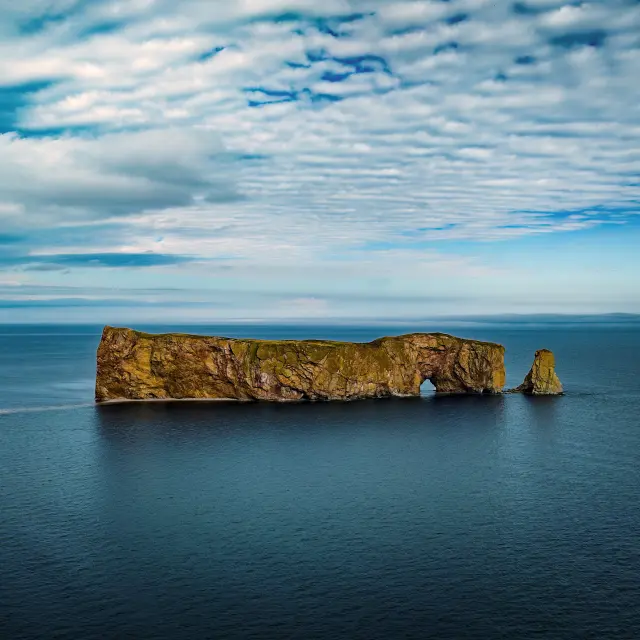
In Percé, observe legendary Percé Rock up close and then visit Bonaventure Island, which is home to 110,000 northern gannets, in the world’s most accessible colony of these birds. Be sure to also visit the Le Boutillier House to learn more about the history of fishing in Gaspésie.

Days 6 and 7 Percé to Gaspé 70 km (45 mi.)

Cap-Gaspé Lighthouse
Perched at an altitude of 95 metres (310 feet) on a cliff in Forillon National Park, the Cap-Gaspé Lighthouse is still operational and can be reached via the Les Graves trail. It is relatively small: only about 13 metres (42 feet) high. The interpretive panels on site explain the navigational aids used here.

Cap-des-Rosiers Lighthouse
The Cap-des-Rosiers Lighthouse is the tallest in Canada! A guide will tell you all about the history of this building and how it operates as you climb to the top of the light tower, which is 34 metres (112 feet) high. A virtual tour on a tablet is also offered on site.

Other maritime attractions in the area 
Forillon National Park
Located at the tip of the Gaspé Peninsula, Forillon National Park is known for its rich plant life and the thousands of seabirds that nest in its cliffs. The park offers a multitude of activities, including whale-watching cruises, hiking, sea excursions, seal watching and beaver watching. Travel back in time to the turn of the 20th century by visiting various period buildings in the Grande-Grave sector that recount the history of this area.

Day 8 Gaspé to Cap-Chat 225 km (140 mi.)

Pointe-à-la-Renommée Lighthouse
Located less than 5 km (3 mi.) off Route 132 on a site offering a majestic view of the Gulf of St. Lawrence, the Pointe-à-la-Renommée Lighthouse invites you to go on a guided tour focused on architecture and history, including the presence of North America’s first maritime radio station, installed here by Guglielmo Marconi’s company in 1904. In the evening, you can watch an outdoor sound and light show projected on the lighthouse and its outbuildings!

Cap-de-la-Madeleine Lighthouse
From the top of the Cap-de-la-Madeleine Lighthouse, admire the immense sea where you may spot whales and northern gannets. Visit the foghorn shed for a glimpse into the history of this area. You can also enjoy a coffee break in the assistant lightkeeper’s house and purchase a few local handicrafts as souvenirs.

La Martre Lighthouse
Visit the La Martre Lighthouse, a unique wooden structure painted bright red, where the rotation of the lighting module is still powered by the original clockwork system. A guide will tell you more about this lighthouse, while the permanent exhibition in an adjacent building will give you the opportunity to discover the development and evolution of lighthouse lanterns since 1700.

Cap-Chat Lighthouse
Perched on a cliff next to a cape in the shape of a sitting cat (cap chat means “cat cape”), the Cap-Chat Lighthouse, which is still in operation, is surrounded by flower paths leading to the sea. Learn about the history of the lighthouse and the lightkeepers by reading the interpretive panels. Various activities are offered on site, and you can also rent the lightkeeper’s house for a stay of 3 or more nights.

Day 9 Cap-Chat to Matane 75 km (45 mi.)

Matane Lighthouse 
From the top of the tower of the Matane Lighthouse, you will be able to observe marine traffic on the St. Lawrence on one side and a wind farm and the Chic-Choc Mountains on the other. In the lightkeeper’s house, you will find a maritime museum presenting a fascinating exhibition about the history of the lighthouse as well as the equipment found in a modern wheelhouse (radar, radio transmitter, weather station, etc.). The La Matanie tourism information office is also housed in this building.

Day 10 Matane to Havre-Saint-Pierre  450 km (280 mi.) + 2 h 20 by ferry (Matane to Baie-Comeau)

Ferry crossing to Baie-Comeau (or Godbout) 
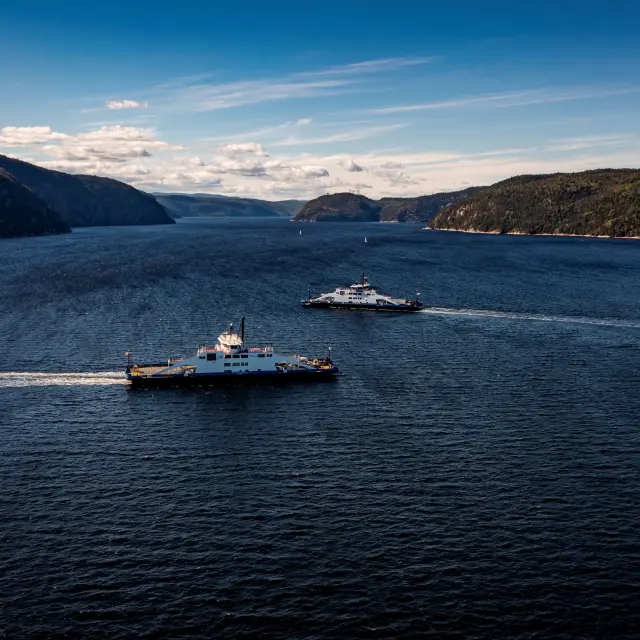
Aboard the F.-A.-Gauthier ferry, take advantage of the two-hour crossing to relax and admire the immense St. Lawrence and the approaching coastline of the region of Côte-Nord. Enjoy the onboard amenities, which include a bistro/cafeteria, a bar, television screens and panoramic lounges. Keep your eyes peeled and you may spot marine mammals!

Day 11 Havre-Saint-Pierre

Petite Île au Marteau Lighthouse 
During an audio tour, discover the history of the Petite Île au Marteau Lighthouse and its importance to navigation on the St. Lawrence. Extend your stay on this island in the Mingan Archipelago National Park Reserve so you can go for a hike and observe seabirds as well as the cliffs of the neighbouring island, Grosse Île au Marteau.

Île aux Perroquets Lighthouse 
Located in an area in the Mingan Archipelago that is difficult to navigate, the Île aux Perroquets Lighthouse has played a critical role since it was built in 1888. Once staffed by two locally famous lightkeepers, Henry de Puyjalon and Placide Vigneau, who were both writers, the light station now offers you the opportunity to discover local plants and wildlife (including Atlantic puffins and razorbills) thanks to an interpretive trail, a permanent exhibition and guided tours. You can even spend the night here…

Other maritime attractions in the area 
Mingan Archipelago National Park Reserve 
Since you are already in the park reserve, take the time to explore the Mingan Archipelago, which is made up of about 20 limestone islands and over a thousand granitic islets and reefs. On the agenda: hiking, sea excursions, wildlife observation, camping or glamping and more.

Side trip 
Pointe-Nord Lighthouse (Cap-de-Rabast) and Pointe-Ouest Lighthouse, Anticosti 
Accessible by boat or plane, Anticosti Island is home to thousands of white-tailed deer and only 300 people. Five lighthouses once stood on the island, but only two are still accessible today, both of which now offer accommodations. The outfitter Pourvoirie Lac Geneviève d’Anticosti will welcome you for a weeklong stay by the sea in the lightkeeper’s house at the Pointe-Nord Lighthouse, which is also known as the Cap-de-Rabast Lighthouse. (A rabast refers to an area where boats take shelter during bad weather.) In addition, the Pointe-Ouest Lighthouse gives you the opportunity to stay in the lightkeeper’s house or assistant lightkeeper’s house. You will then want to visit Parc national d’Anticosti to see the caves, waterfalls and canyons that this park is known for.

Day 12 Havre-Saint-Pierre to Sept-Îles 220 km (135 mi.)

Île du Corossol Lighthouse 
If you go on a sea excursion in the Sept Îles Archipelago, you will be able to see the Île du Corossol Lighthouse, which was built in 1870. Since the island is a seabird sanctuary (the largest in Eastern Québec!), it is not open to the public, but you can still admire all the birds in this archipelago. You can also visit Grande Basque Island for a day of relaxation on a beach or trail. On your own or with a naturalist guide, you can observe local plants, wildlife and geology along the island’s 12 km (7.5 mi.) of hiking trails.

Day 13 Sept-Îles to Baie-Trinité 140 km (85 mi.)

Pointe-des-Monts Lighthouse 
Visit the Pointe-des-Monts Lighthouse where you will find an exhibition on seven floors. During a tour on your own or with a guide, you will discover the lives of the eight lightkeepers who lived here from 1830 to 1964 as well as information about local shipwrecks and more. At the top of the tower, which is 21 metres (69 feet) high, you can admire an incredible view of the sea!

Day 14 Baie-Trinité to Tadoussac 285 km (175 mi.)

Cap-de-Bon-Désir Lighthouse 
Located on the site of the Cap-de-Bon-Désir Interpretation and Observation Centre, which is managed by Parks Canada, the Cap-de-Bon-Désir Lighthouse, the last one on this itinerary, invites you to visit its outbuildings: the lightkeeper’s house, which houses an exhibition about observing marine mammals; the assistant lightkeeper’s house, where you can relax in a 1960s atmosphere; and the foghorn shed, where you can learn more about the fog signals used as navigational aids. A trail will then lead you to one of the best places in the world to observe whales and seals: along the shores of the Saguenay–St. Lawrence Marine Park! Interpreter guides are on site to deepen your knowledge and answer your questions.

Other maritime attractions in the area 
Whale-watching excursions in the Saguenay–St. Lawrence Marine Park 
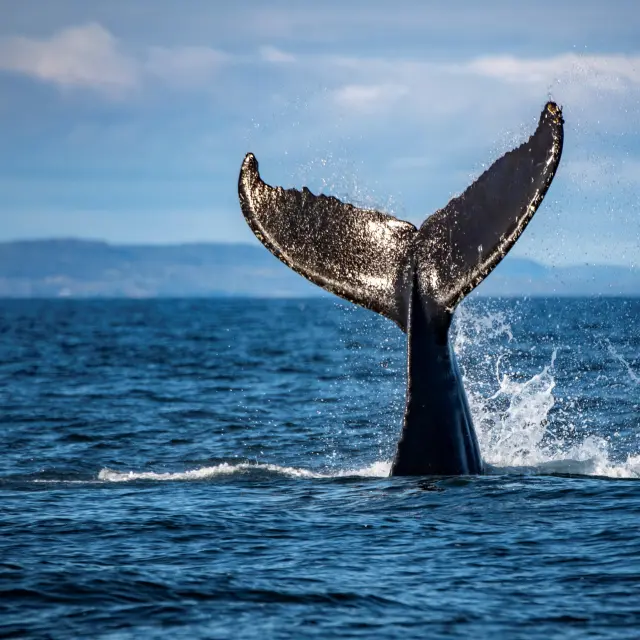
Covering an area of 1245 km2 (480 sq. mi.), the Saguenay–St. Lawrence Marine Park is the only marine protected area in Québec. Go on a sea excursion in a Zodiac or comfortable sightseeing boat to see the many species of whales found in the marine park. You can also observe them from several locations along the shore in this area.

Parc national du Fjord-du-Saguenay 
Parc national du Fjord-du-Saguenay is home to majestic landscapes that were carved out by retreating glaciers about 20,000 years ago. Discover this spectacular scenery while hiking or sea kayaking. You can also admire belugas from a lookout designed specifically for this purpose.