The Québec maritime Blog
-
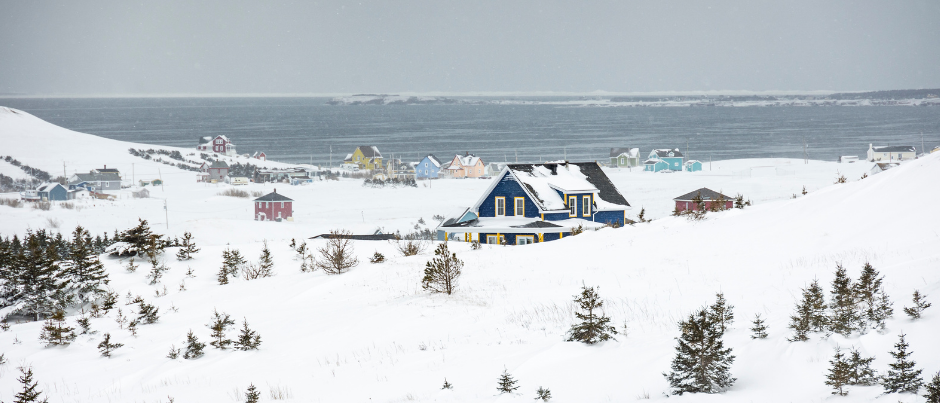
Havre-aux-Maisons, Îles de la Madeleine
Mathieu Dupuis/Tourisme Îles de la Madeleine
Discover the Culinary Identity of the Islands as You Savour the Flavours of Winter!
The Îles de la Madeleine archipelago is a unique destination anchored in the middle of the Gulf of St. Lawrence. Shaped by our rich cultural heritage and remote location, our culinary identity is expressed in different ways throughout the seasons. In our invitation to discover the culinary identity of the Islands in the spring, we explored the roots of this unique culture and the influences that have shaped the way we grow, cook and share food. We also introduced you to summer and fall traditions and activities, which gave you an idea of how attached Islanders are to their land and how proud they are to share the archipelago’s abundant harvests as well as their stories and expertise with visitors.
While winter may be considered the low season, if you visit the archipelago at this time of year, you’ll discover that traditions continue to be celebrated to the fullest, even during the cold season.
Throughout this blog post, you’ll come across terms and expressions typical of the Islands that will immerse you even further in our culture. These words (in italics in the text) are listed in the glossary at the end of this post.
Winter on the Islands: A season for gatherings and traditions
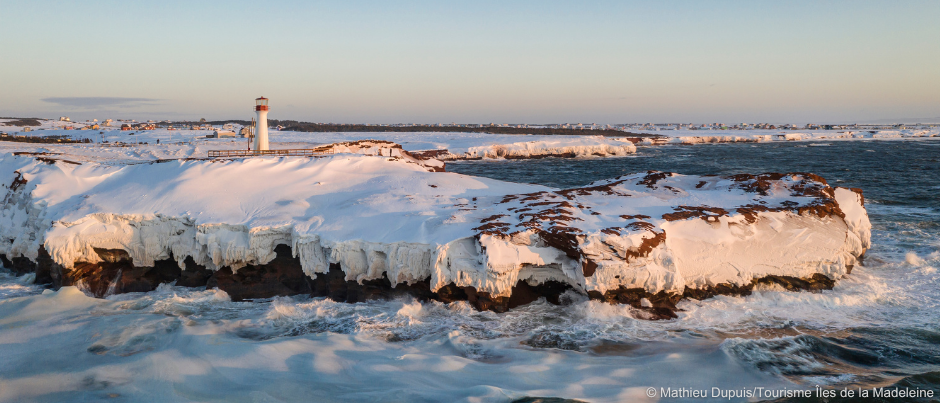
From December to March, powerful winds sweep across the archipelago, prompting Islanders to slow down. Despite the cold outside, our homes are filled with warmth: card games, music, afternoons in the shed where we make bagosse… We’ll use any excuse to get together. All the food that was put away during the milder seasons comes out at this time of year. We also look forward to a number of winter traditions such as Mid-Lent (which features lavish buffets), seal hunting and outdoor activities like hockey on frozen ponds or ice fishing.
Hunting and fishing at the heart of the Islands’ culinary heritage
Historically, hunting for sea lions was vital to the survival of the Islanders. When food supplies ran low, this meat provided sustenance to families and helped them survive harsh winter conditions.
At one point, the seal hunt was considered controversial, leading to a reluctance on the part of Islanders to proudly proclaim it as part of our cultural heritage. Fortunately, thanks to the efforts of the community, this tradition has been reclaimed. Since 2010, for example, the Rendez-Vous Loup-Marin (Sea Lion Gathering) has celebrated the importance of seals in our culture and explored all aspects of the expertise associated with these marine mammals.
One of the highlights of this annual event is the Seal Hunter’s Dinner at Auberge La Salicorne, which offers a truly unique culinary experience. Local chefs, in collaboration with guest chefs from elsewhere in Québec, present original dishes that feature this iconic meat, from appetizers to desserts!
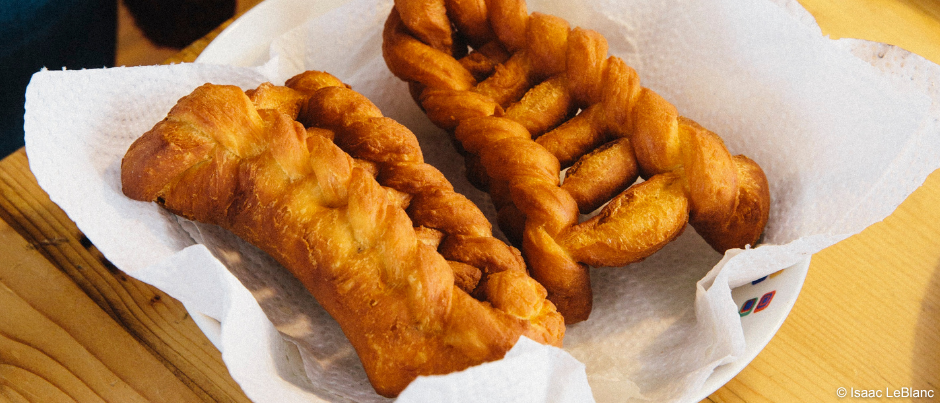
Today, seal meat is making a comeback on restaurant menus across the Islands. Establishments such as the Accents resto bistro at Château Madelinot, Chez Renard and Aux Pas Perdus showcase the distinctive flavour of this meat. The importance of seal hunting is also evident in villages throughout the archipelago, many of which have their own traditions such as making croxignoles, which you’ll find on Havre aux Maisons Island.
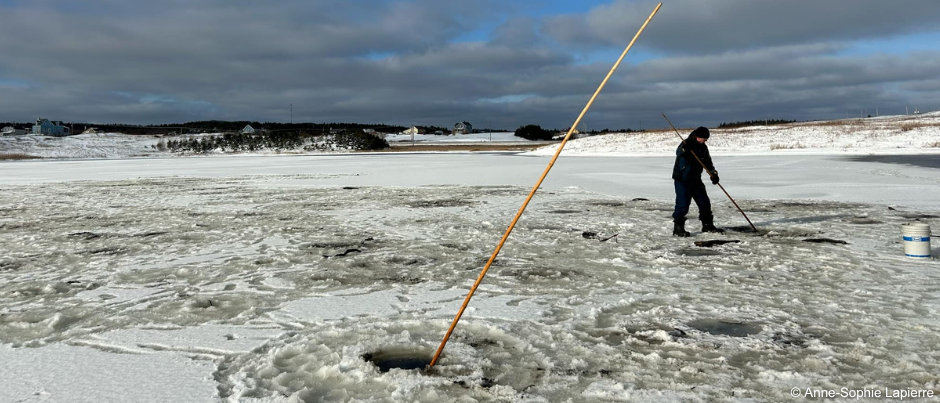
During the winter, many Islanders also enjoy ice fishing for smelt or eel. While eel may not seem appealing at first glance, it’s a food source with firm and delicate flesh. Fishing takes place on frozen bays using a fouëne.
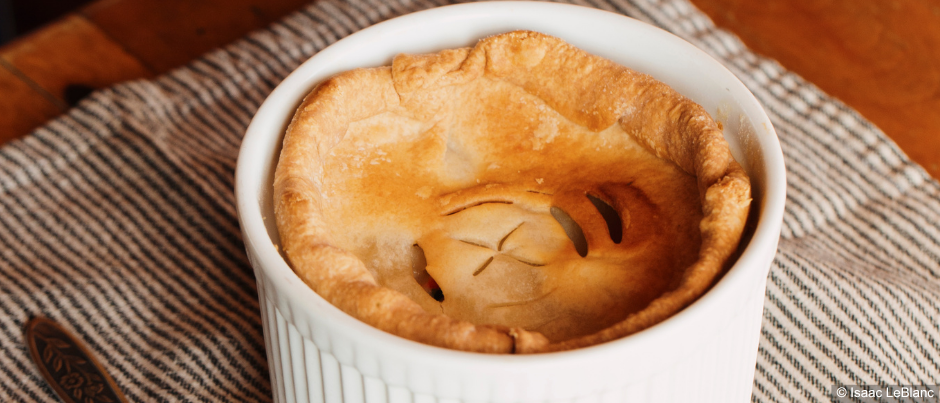
In local families, eel meat is often prepared in a pâté or pot-en-pot. These dishes can sometimes be found on restaurant menus, but making them is mainly something that’s been passed down from generation to generation without being widely commercialized.
Winter in the Îles de la Madeleine transcends the cold season. It’s a time when culinary traditions are celebrated and each dish tells a story, reflecting our resilience and adaptability in the face of the challenges of our island environment.
If you’d like to learn more, we invite you to consult the “Bouilli d’histoires salées” alphabet primer (in French only), which will plunge you into the heart of the archipelago’s vibrant food traditions throughout the seasons.
Glossary
Bagosse: Often called the “beer of the Islands” by locals, this drink is actually a traditional home-brewed fruit wine. Once upon a time, it would have been the only drink available on the Islands and every family would have had their own recipe. Bagosse is carefully decanted to remove the sediment formed after fermentation, making it clearer and ready to be shared with friends!
Croxignole: A unique-tasting braided pastry, traditionally fried in seal oil.
Fouëne: A tool resembling a harpoon that’s attached to the end of a handle. To catch eels in the winter, you would thrust this tool back and forth in a hole drilled in the ice.
Mid-Lent: On the Islands, Mid-Lent is celebrated only in Fatima. For a week, people put on masks and go from house to house playing music and drinking bagosse while their hosts try to guess who they are… often by looking at their hands!
Pâté: A savoury dish baked in the oven, consisting of a filling (meat, fish, seafood or vegetables) wrapped in pastry.
Pot-en-pot: A traditional and popular dish from the Islands. A type of pot pie, this dish is made with various types of seafood (often whatever is available) in béchamel sauce.
Sea lion: Another name for the seals that inhabit the waters around the Islands. In the past, the Islanders mainly hunted harp seals, but with the decline of sea ice, grey seals are now the most common species found and hunted in the region.
Shed: On the Islands, this term often refers to a garage, although it’s usually a small wooden storage building. Used in a variety of ways, some are even surprisingly comfortable!
Smelt: A small silvery fish that can be caught in fishing huts on the ice.
If you liked this article, you might also like...
Author Le Bon goût frais des Îles de la Madeleine


A community’s culinary identity reflects its history and environment as well as the traditions handed down from generation to generation. Le Bon Goût Frais des Îles de la Madeleine (website in French only) invites you to discover the culinary culture of the Islands, season by season, through a series of blog posts.
As a local foods association, Le Bon Goût Frais des Îles (which literally means “A Fresh Taste of the Islands”) promotes and nurtures the Islands’ vital strengths, embodying community commitment, the uniqueness of local food artisans and their products, constant innovation and the distinctive character of the Îles de la Madeleine.
(1) comment
Kenneth F Logan
Thanks
You are welcome ! :)