The Québec maritime Blog
-
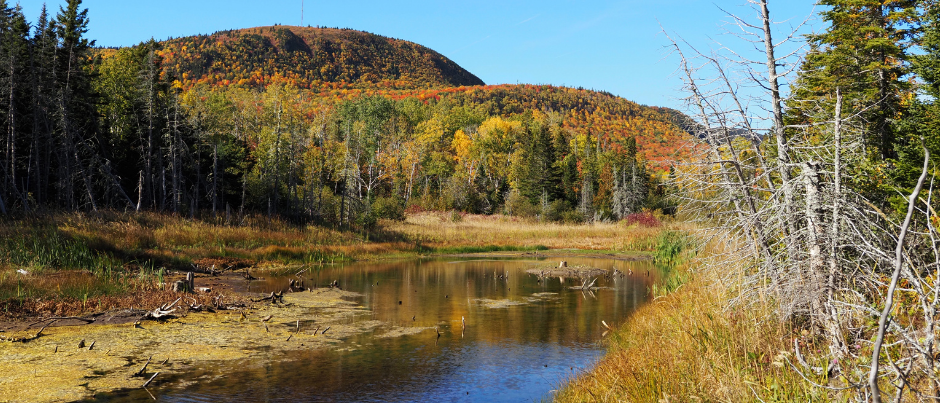
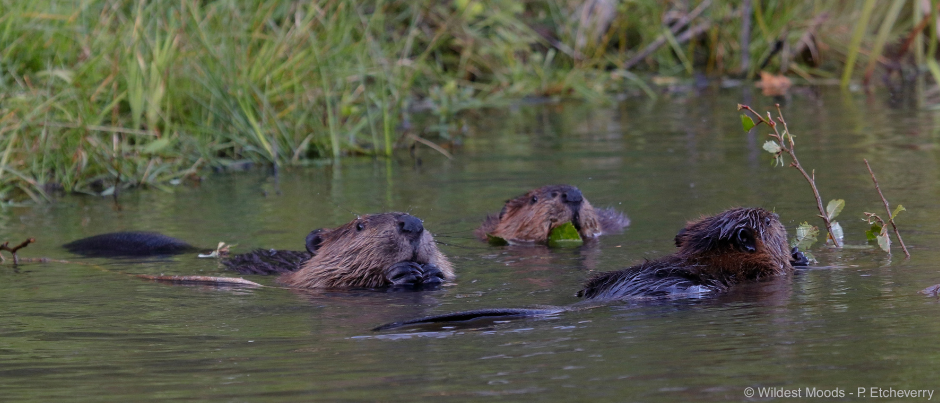
Beaver pond, Forillon National Park, Gaspésie
Parks Canada
New Hiking Trails in Forillon National Park
Rewilding the Beaver Ponds Area
Although Forillon National Park is known above all for the beauty of its coastal scenery in Gaspésie, it’s also home to an impressive variety of terrestrial ecosystems. To see this for yourself, all you need to do is explore the beaver ponds area in the park where three new trails have been developed as part of a major ecological restoration and enhancement project.
Following the reconstruction of Route 132 linking the North and South areas of the park in 2017, Parks Canada set out to remove the scar left on the landscape by the abandoned section of the old road. In 2024, major work was carried out to remove the roadbed and culverts along nearly 6 km (4 mi.) of the old road as well as reshape the terrain to reconnect the habitats and waterways that bordered it. As a result, 133,000 m2 (1,431,600 sq. ft.) of forest and sections of six streams, once crossed by the road, have now been restored, allowing beavers (Parks Canada’s longstanding emblem) to reclaim their habitat.
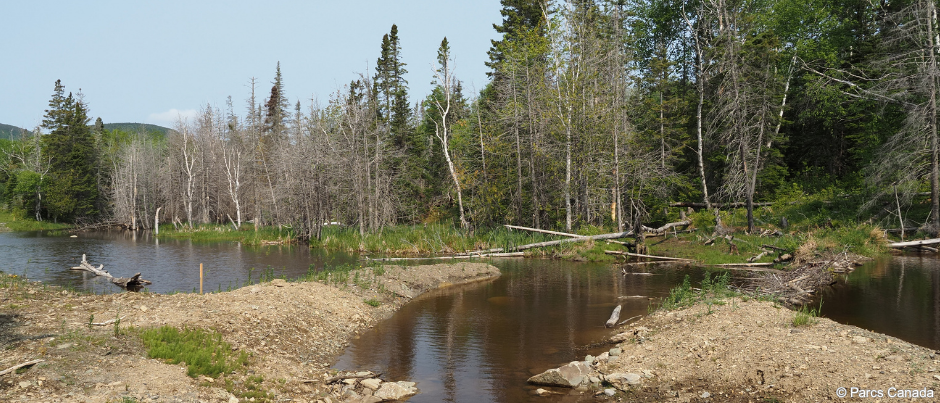 Beavers are reclaiming their habitat along an old section of Route 132
Thanks to this new network of trails, which is nearly 7 km (4 mi.) long, visitors can now explore these wetlands and forests that teem with biodiversity.
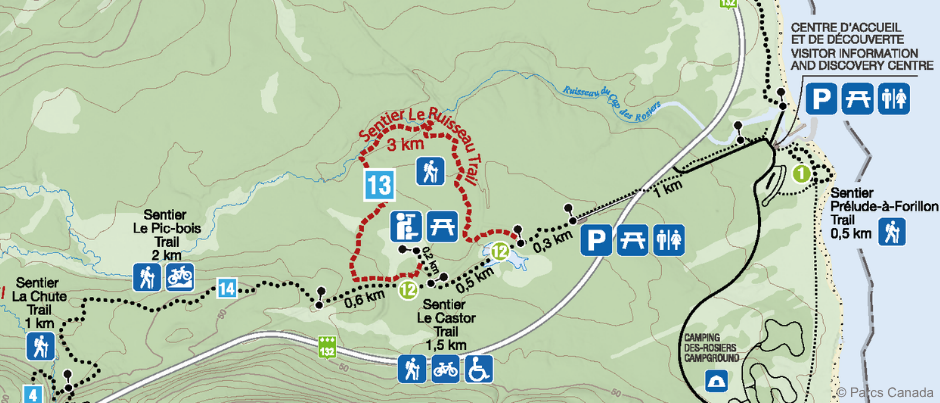 Map of the new trails
Le Castor trail
Running alongside the beaver ponds, this 1.4-km (0.9 mi.) trail is suitable for both walking and biking. Its gentle gradient also makes it an ideal choice for families with young children using strollers and for people with reduced mobility. You can access the trail on foot from the Visitor Information and Discovery Centre (near the North Area entrance) or by car from the Le Castor parking lot.
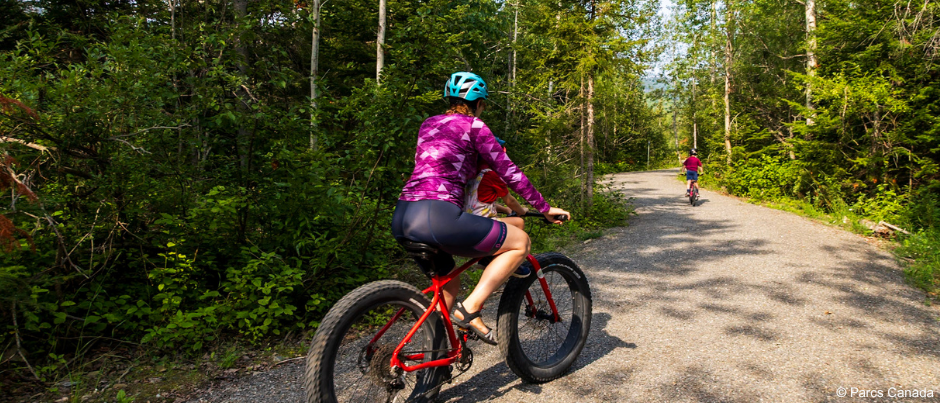 Le Castor trail
You don’t need to see the beavers at work to appreciate the scale of what these little architects of nature can accomplish. The gnawed tree trunks and landscapes shaped by these mammals are a testament to their tenacity. At about the trail’s midpoint, pause at the observation platform to admire the beavers’ handiwork up close and, with a little luck, catch these animals in action! Keep in mind, however, that they tend to stay hidden on hot summer days. To maximize your chances of spotting beavers, visit at dawn or dusk or in the spring or fall, when they’re actively preparing for the change in season.
If you’re travelling as a family, you may want to go on the “Sam and the Beaver” mobile guided tour, which is available for free on the Parks Canada app. Embark on an adventure with Sam the Owl and discover, through fun games and videos, how beavers build dams, communicate with each other and transform the forest.
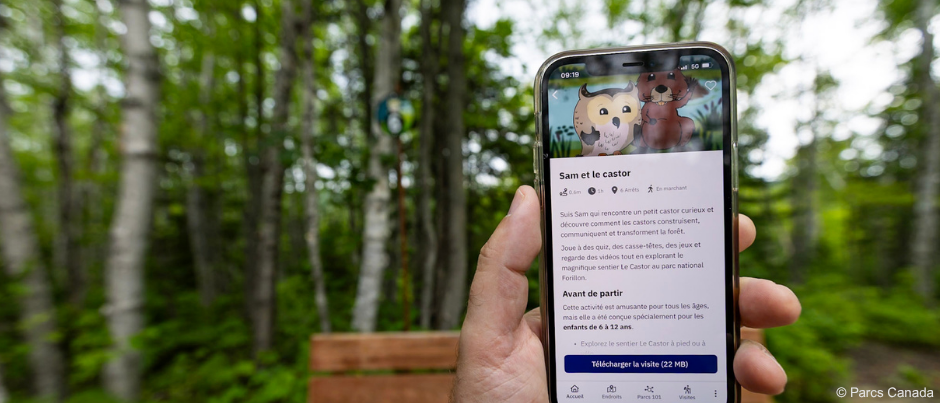 Sam and the Beaver mobile guided tour
If you’d prefer to spend time with an interpreter guide, visit the Discovery Activities page on our website to find out more about the guided hikes offered in this sector.
Trailheads:
- Visitor Information and Discovery Centre
- Le Castor parking lot
Le Ruisseau trail
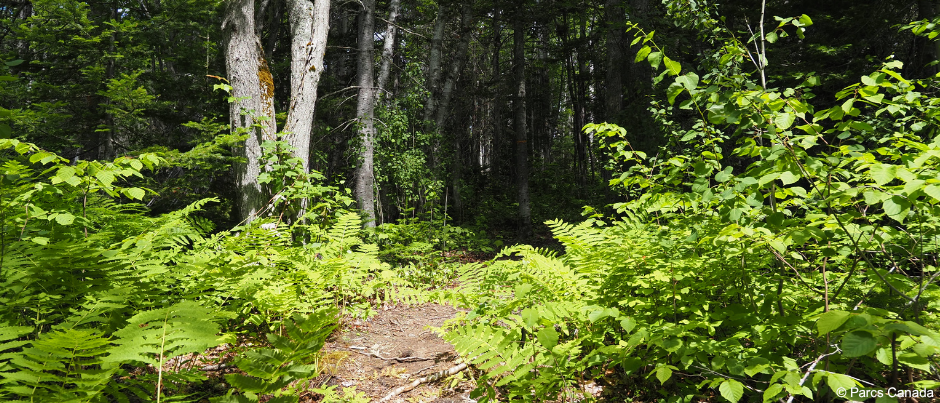 Le Ruisseau trail
Reserved for hiking, this trail (4 km / 2.5 mi.) winds through the forest, skirting the beaver habitat. At about the midway point, it meets the pretty Cap des Rosiers stream. Bordered by white spruce and mature cedar trees as well as ferns and lush mosses, Le Ruisseau inspires a sense of invigorating calm. In fact, the moose tracks that you may spot along this trail prove that hikers aren’t the only ones to enjoy this idyllic spot! The dense forest canopy and nearby wetlands provide ideal habitats for a multitude of plant and wildlife species.
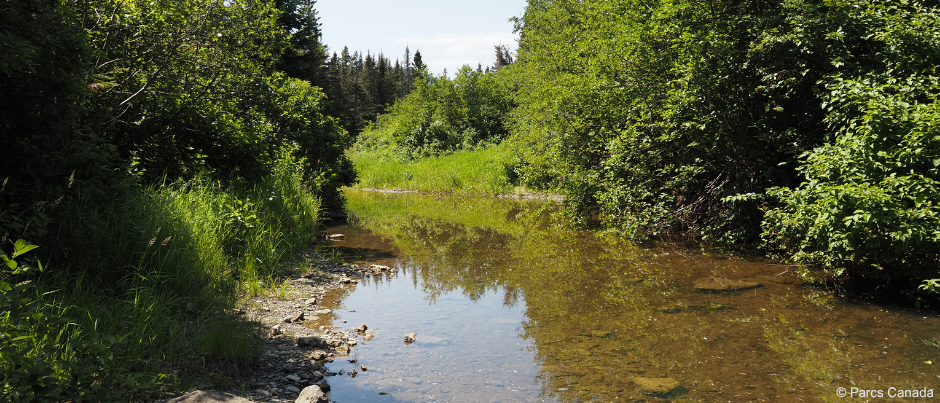 Cap des Rosiers stream
Cyclists who want to explore Le Ruisseau can leave their bikes at the bike rack located at the trailhead.
Trailhead:
- Le Castor parking lot
Le Pic-Bois trail
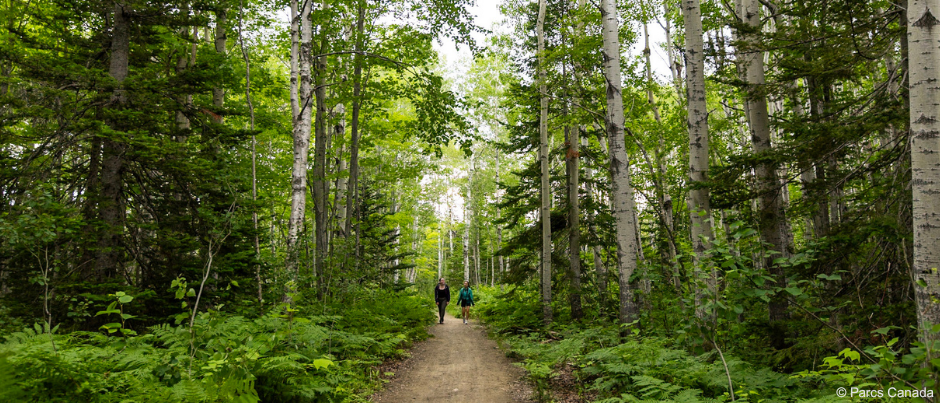 Le Pic-Bois trail
This 2-km (1.2-mi.) trail connects the La Chute and Le Castor trails and is accessible on foot or by bike. Hikers can access it from either end while cyclists must use Le Castor since the La Chute trail is reserved for hiking.
Le Pic-Bois crosses through a lush mixed forest teeming with birds, including woodpeckers (hence the name of the trail, since pic-bois means “woodpecker” in French). Like beavers, these birds also leave clear signs of their presence, in the trees they’ve fed on and nested in. Aspens, which are abundant in this area, are particularly favoured by woodpeckers looking for soft, large-diameter trees in which to nest. If you keep your eyes peeled, you’re sure to spot the cavities of various sizes carved out by downy woodpeckers, hairy woodpeckers, yellow-bellied sapsuckers, northern flickers and pileated woodpeckers!
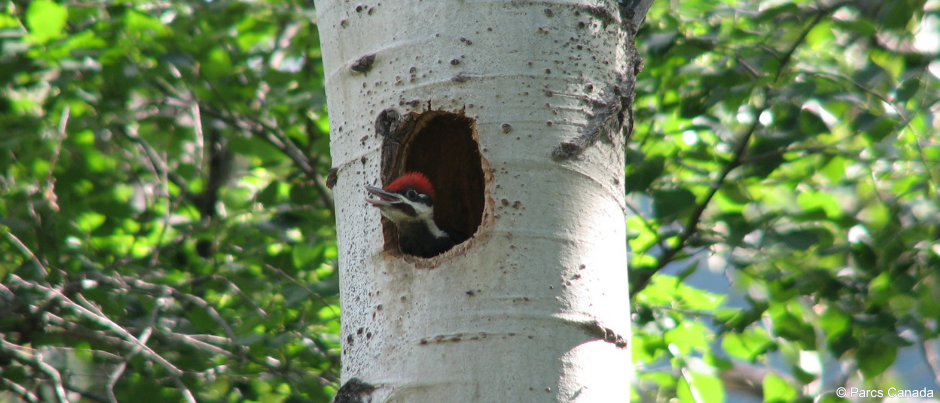 A young pileated woodpecker in its nest
With its moderate gradient, Le Pic-Bois is a perfect trail for beginner hikers. For an interactive experience, meet Sam the Owl during the “Sam and His Forest” mobile guided tour, which is available for free on the Parks Canada app.
Trailheads:
- Le Castor parking lot
- La Chute parking lot
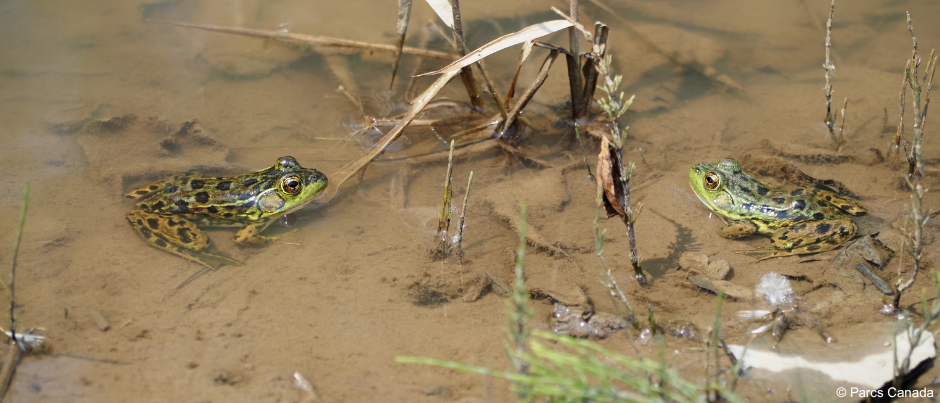 Mink frogs
No matter which trail you choose, remember that an environment’s biodiversity isn’t limited to the most visible wildlife species. It’s also evident in the buzzing of insects, the croaking of frogs, the quiet presence of reptiles and the astonishing variety of plants that make up these ecosystems. During your hikes, keep your eyes and ears open, and, above all, stay on the trails to protect these fragile habitats and allow all these species to continue to thrive. Happy hiking!
If you liked this article, you might also like...
Author Parc national Forillon

Located at the northeastern tip of the Gaspé Peninsula and mainly covered in forests, Forillon National Park protects an area of 245 km² (95 sq.mi.) and is home to rich and abundant wildlife, coves where curious seals swim, and striated cliffs where thousands of seabirds nest. In addition, the plant biodiversity of this natural territory includes several protected species.
Forillon also commemorates the peninsula’s rich human history. While the Mi’gmaq have occupied this territory since time immemorial, a few houses on a hillside come alive in the summer to tell the stories of the fishermen-farmers of various origins who lived off cod fishing in Forillon until the park was created in 1970.
Discover the seasonal charms of Forillon’s coastal landscapes, explore trails for hikers of all levels and stay in the park at a campsite or in a unique glamping unit. A visit to Forillon National Park is an opportunity to enjoy authentic moments in harmony with nature along the coast by the sea and on forested mountains.
The Parks Canada Gaspésie Field Unit manages Forillon National Park as well as the Pointe-au-Père Lighthouse National Historic Site and the Battle of the Restigouche National Historic Site.
(0) comment