The Québec maritime Blog
-
Forillon National Park, Gaspésie
Sébastien St-Jean
4 Unique Plants to See in Forillon National Park
Forillon National Park is home to over 600 plant species, some of which stand out for their remarkable characteristics or ability to adapt and survive in the sometimes-inhospitable environments found between the sea and mountains. Whether they’re inconspicuous or highly visible, these fascinating species contribute to Forillon’s rich natural mosaic. But do keep in mind that appearances can be deceiving! Can you spot the odd one out among the four following species?
Lyme grass
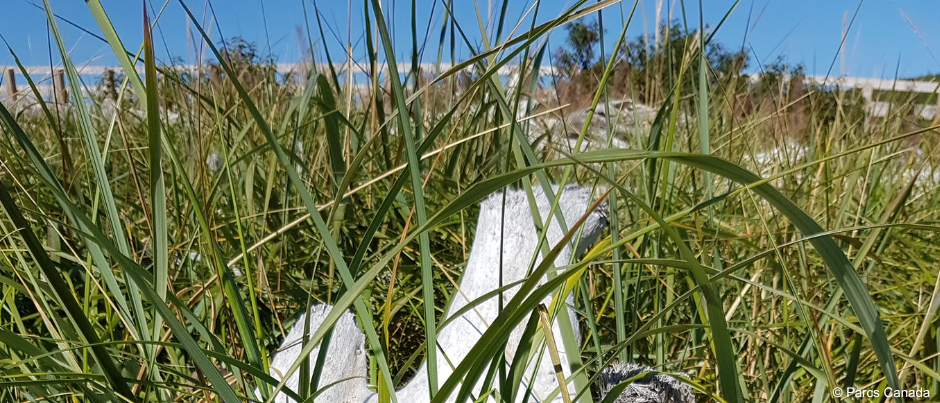
Also known as American dune grass, lyme grass is in the Poaceae family, which makes it a true grass like many domesticated cereals such as wheat and oats. In the summer, its tall, pale-yellow spikes can be seen swaying in the wind at Penouille and Cap-des-Rosiers.
Since lyme grass prefers sandy soil, it’s found mainly on the upper parts of beaches, on dunes and around marshes.
If you look closely at its long, bluish-green leaves, you may notice a fine waxy film called pruina. This thin, whitish layer protects lyme grass from the sometimes-harsh conditions along the coast by reflecting the sun’s rays and creating a barrier against sea salt.
Lyme grass plays a vital role in preventing shoreline erosion. Thanks to its dense foliage and extensive root system, it acts as a natural barrier that holds sediment in place.
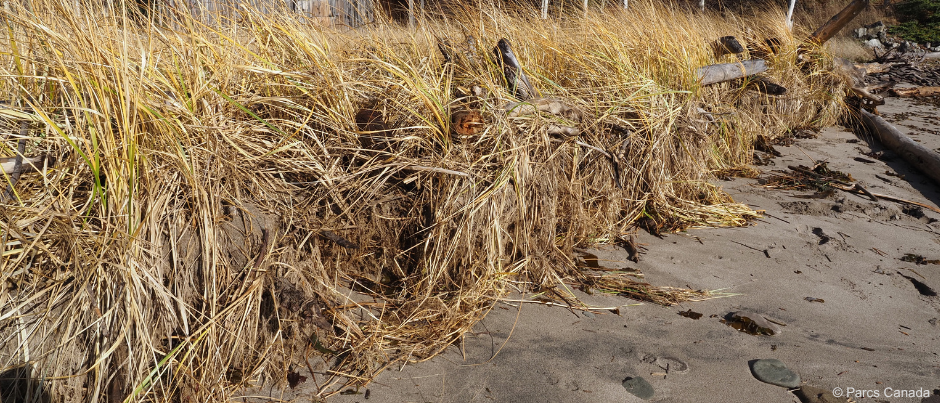
Although this delicate-looking plant is surprisingly hardy, it’s important to take good care of it! When you’re enjoying the beaches at Penouille or Cap-des-Rosiers, please avoid walking on it so it can continue to protect our precious coastal landscapes.
Québec rockcress
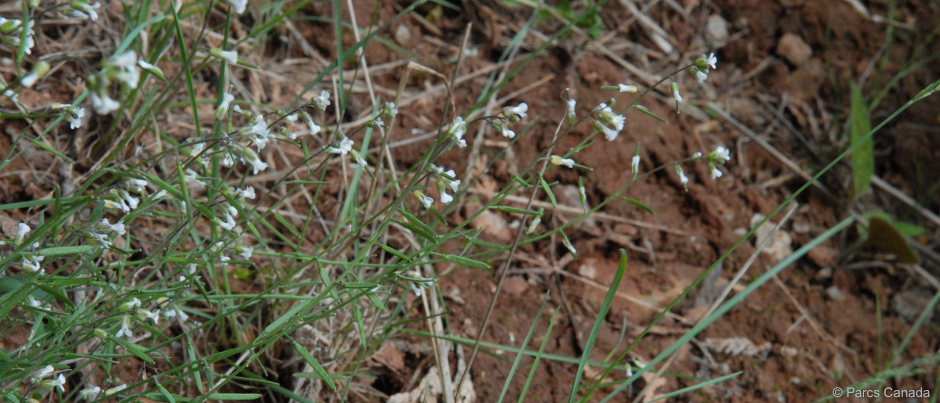
Québec rockcress is one of about 40 arctic-alpine plant species found in Forillon National Park. Typically associated with mountainous or polar environments, these plants are believed to have established themselves on the cliffs of Forillon following the retreat of the glaciers some 10,000 years ago.
Over time, plants from more southern climates gradually replaced the arctic-alpine species in this area. However, some of them, including Québec rockcress, still thrive in places where few other plants survive.
Unobtrusive and elegant, Québec rockcress can be differentiated from other rockcress species by its clusters of small white flowers with a slight lavender tint arranged on the same side of the stem. Despite being delicate, this plant somehow manages to survive in arid and unstable environments. It’s found in rocky habitats rich in limestone such as coastal cliffs, escarpments, rock cavities and scree slopes.
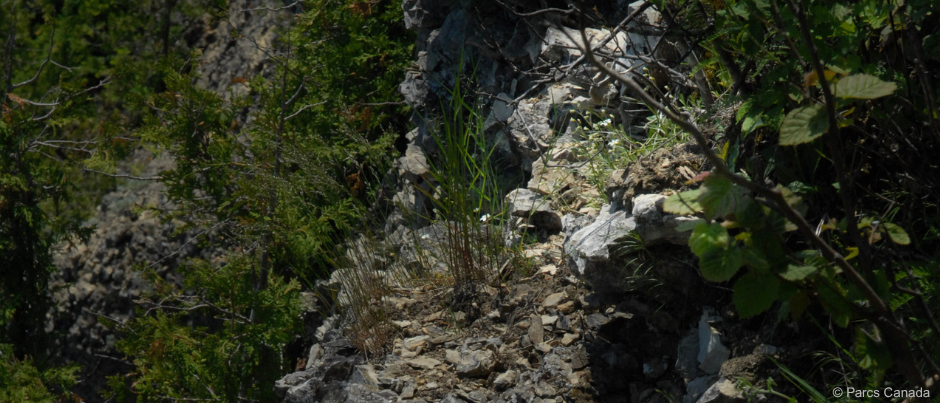
Although Québec rockcress is remarkably resilient, it’s also imperiled. In fact, the Committee on the Status of Endangered Wildlife in Canada has designated the species as endangered. It’s found at only five known locations in the world, all of which are in Bas-Saint-Laurent or Gaspésie. One of these is on Mt. Saint-Alban, at the heart of Forillon National Park.
Though inaccessible to visitors, Québec rockcress is very present in the park, serving as a reminder of both the strength and fragility that characterize the coastal cliffs of Forillon. When you find yourself at the top of the Mont-Saint-Alban tower, whether under a blazing sun or in persistent wind, remember that these small forces of nature surround you.
Eelgrass
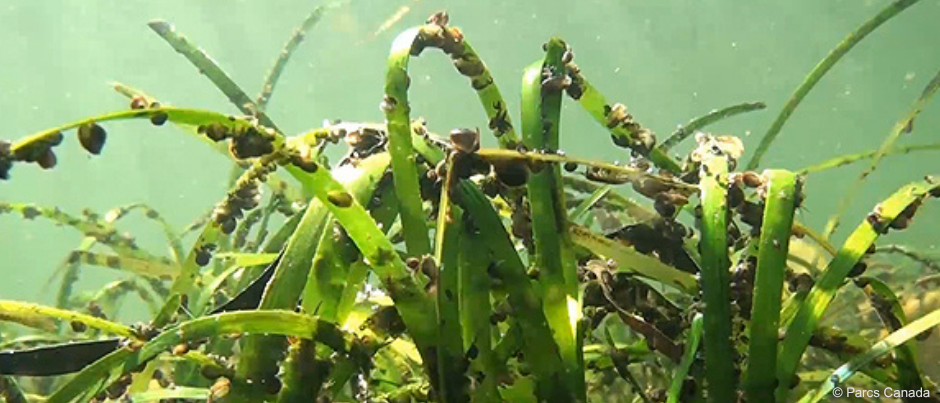
The marine environment around the Penouille Peninsula teems with aquatic plants that form underwater meadows. This type of habitat is called an eelgrass bed.
Although eelgrass lives completely underwater, it’s not a type of algae but rather a vascular plant, with roots, leaves, flowers and seeds! It grows in shallow coastal areas where the water is relatively clear, since it relies on photosynthesis and therefore on sunlight for nourishment.
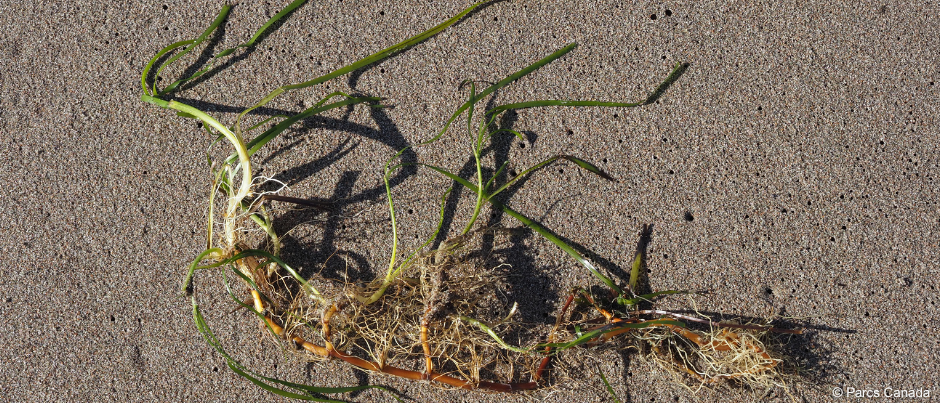
While most plants are sensitive to excess minerals, eelgrass has unique adaptations that allow it to thrive in saltwater. In addition, its long, narrow leaves reduce water resistance, while its roots anchor it firmly to the seabed.
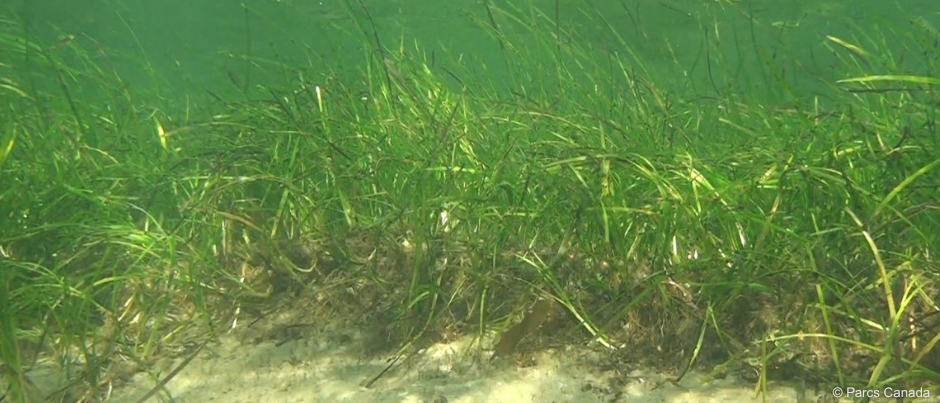
Eelgrass beds serve many functions in the coastal ecosystem. They stabilize sediments near the shoreline, provide a spawning ground for many fish species, harbour a multitude of aquatic species that hide in their foliage or burrow into the sand, and serve as a food source for many species of birds and fish.
However, some eelgrass beds in Eastern Canada are showing signs of decline or deterioration, and the one in Forillon National Park is no exception. The park’s natural resource conservation team monitors the Penouille eelgrass bed on an annual basis to assess its biodiversity and track any changes to it. Although the factors contributing to the decline of eelgrass beds may be numerous and vary from one location to another, these scientific monitoring efforts are essential to better understand what’s causing these underwater meadows to weaken and to help us protect them and preserve the coastal ecosystems that depend on them.
Star-tipped cup lichen
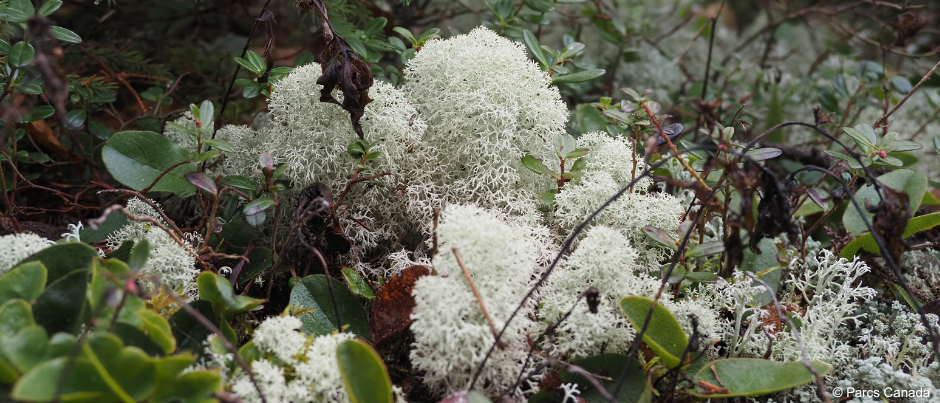
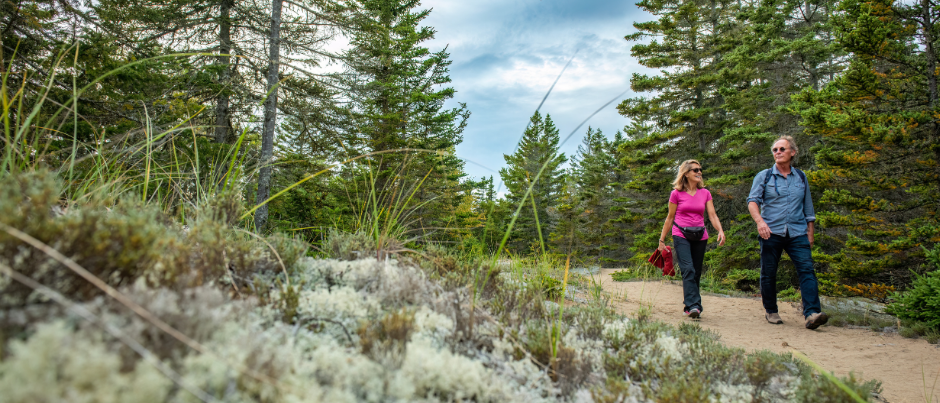
The Penouille area is home to all kinds of unusual flora. Against all odds, in the middle of this sandy peninsula lies a taiga carpeted with star-tipped cup lichen (also known as star reindeer lichen)! Usually characterized by conifers and lichens, the taiga is a type of open forest that typically covers subarctic regions where the boreal forest gives way to the Arctic tundra.
Unlike the three other species mentioned above, star-tipped cup lichen is not a plant! It’s actually a shrub-like lichen resulting from a remarkable symbiotic partnership between an alga and a fungus. The fungus envelops the alga and provides it with the water and minerals it needs to survive, while the alga shares the sugar it produces through photosynthesis with the fungus.
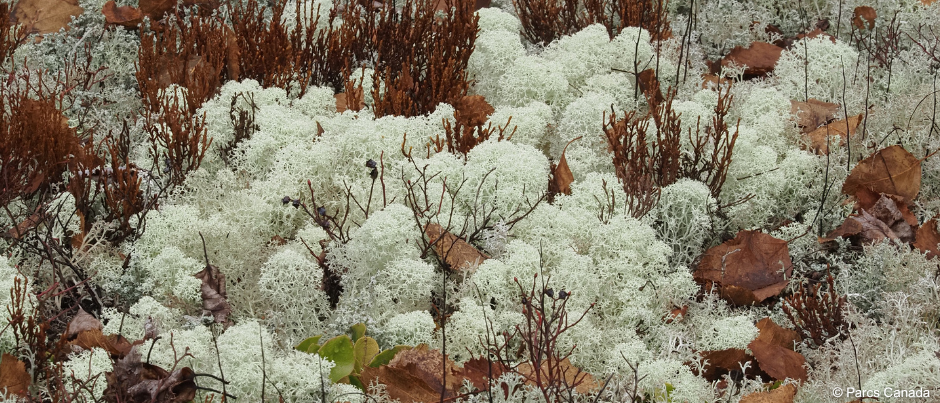
While the more literal among us may think that star-tipped cup lichen resembles a cauliflower and the more imaginative might see clouds, it’s only upon closer inspection that you’ll be able to make out its countless branches, which give it the appearance of a miniature shrub. These star-shaped tips are obviously where this plant-like organism gets its name.
Since lichens have no roots, the ones that cover the sandy soil of the Penouille taiga are very sensitive to trampling. It’s therefore extremely important to stay on the trails to avoid damaging them.
When you spot these bright clusters, be sure to take a deep breath! Star-tipped cup lichen is an excellent bioindicator of air quality, and its abundance is a sign of a healthy environment!
The plants (and plant-like organisms) found in Forillon National Park still have plenty of surprises in store for you! Are you interested in discovering these amazing species? Plan your trip to this park today!
If you liked this article, you might also like...
Author Parc national Forillon

Located at the northeastern tip of the Gaspé Peninsula and mainly covered in forests, Forillon National Park protects an area of 245 km² (95 sq.mi.) and is home to rich and abundant wildlife, coves where curious seals swim, and striated cliffs where thousands of seabirds nest. In addition, the plant biodiversity of this natural territory includes several protected species.
Forillon also commemorates the peninsula’s rich human history. While the Mi’gmaq have occupied this territory since time immemorial, a few houses on a hillside come alive in the summer to tell the stories of the fishermen-farmers of various origins who lived off cod fishing in Forillon until the park was created in 1970.
Discover the seasonal charms of Forillon’s coastal landscapes, explore trails for hikers of all levels and stay in the park at a campsite or in a unique glamping unit. A visit to Forillon National Park is an opportunity to enjoy authentic moments in harmony with nature along the coast by the sea and on forested mountains.
The Parks Canada Gaspésie Field Unit manages Forillon National Park as well as the Pointe-au-Père Lighthouse National Historic Site and the Battle of the Restigouche National Historic Site.
(0) comment