The Québec maritime Blog
-
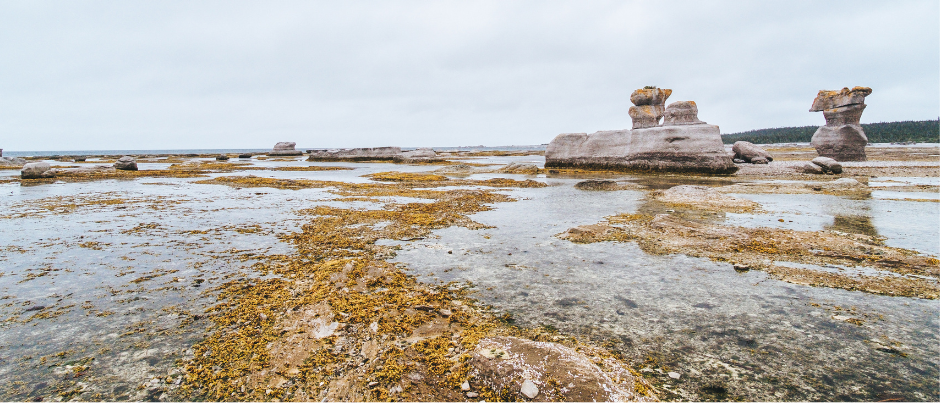
Mingan Archipelago National Park Reserve, Côte-Nord
Yvon à l'aventure/Tourisme Côte-Nord
National Parks in Côte-Nord
A region of incredible natural diversity cradled by the St. Lawrence Estuary and bordered by the boreal forest, Côte-Nord is a true paradise for outdoor lovers. Reflecting this majestic natural environment, the region’s national parks have much to offer those who wish to explore them.
Saguenay–St. Lawrence Marine Park

A marine protected area covering 1245 km² (480 sq. mi.), the Saguenay–St. Lawrence Marine Park is home to exceptional biodiversity. Starting at the mouth of the Saguenay River, the marine park extends all the way to Les Escoumins.
- How to get there: As its name suggests, the Saguenay–St. Lawrence Marine Park is entirely made up of water. However, you can experience the park both on land and at sea. The areas along the Saguenay River are accessible via Route 172 while those along the St. Lawrence Estuary, between Tadoussac and Les Escoumins, can be reached via Route 138.
- When it’s open: Between June and October, you can go on a sea excursion in the marine park as well as visit the two land-based Parks Canada sites in Côte-Nord.
- Distinctive features: Located at the confluence of the Saguenay Fjord and the St. Lawrence Estuary, the Saguenay–St. Lawrence Marine Park is a unique ecosystem that is home to nearly 2200 wildlife species.
- What to do in the park: To observe whales and seabirds in the marine park, you can participate in a sea excursion departing from Tadoussac, Les Bergeronnes or Les Escoumins. If you’d rather watch marine mammals from the shore and learn from interpretive guides, you can visit the Cap-de-Bon-Désir Interpretation and Observation Centre in Les Bergeronnes and/or the Marine Environment Discovery Centre in Les Escoumins.
- Signature wildlife species: Whales are one of the region’s iconic species for good reason: the marine park is one of the best places in the world to see them! Up to 13 species of whales frequent the waters of the park. Swimming up the St. Lawrence to feed at the mouth of the Saguenay River, these majestic marine mammals can be observed during sea excursions as well as from several locations along the shore.
- Lodging options: Bordering the Saguenay–St. Lawrence Marine Park, the municipalities of Tadoussac, Essipit, Les Bergeronnes and Les Escoumins offer a wide variety of lodging options.
Parc national du Fjord-du-Saguenay
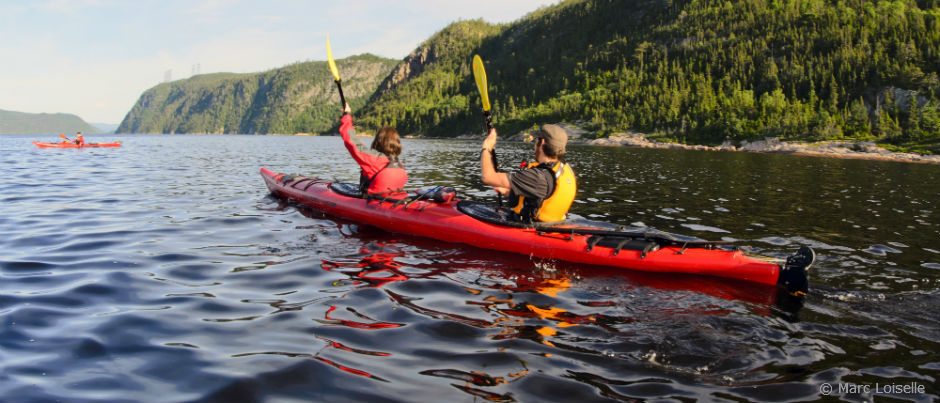
You don’t have to go all the way to Norway to see an impressive fjord! A glacial valley carved out over 175 million years ago, the Saguenay Fjord is bordered by Parc national du Fjord-du-Saguenay, a park that will enchant both whale watchers and visitors in search of natural beauty.
- How to get there: The sector of this park that’s in Côte-Nord is accessible via Route 172 between Sacré-Coeur and Tadoussac.
- When it’s open: The park is open from mid-May to mid-October.
- Distinctive features: The park borders one of the longest and southernmost fjords in the world and is home to remarkable landscapes that you won’t see anywhere else in Québec.
- What to do in the park: Several hikes of varying levels of difficulty offer breathtaking views of the fjord in the Baie-Sainte-Marguerite and Baie-de-Tadoussac sectors. Guided sea kayaking excursions are also offered from mid-June to mid-October.
- Signature wildlife species: The Saguenay River is a habitat favoured by beluga whales. The Halte du Béluga lookout in Sacré-Coeur is a great place to observe these white cetaceans.
- Lodging options: The park offers over 50 campsites for tents and RVs as well as Étoile glamping units and tent platforms for kayakers and trekkers.
Parc national d’Anticosti

Located on Anticosti Island, Parc national d’Anticosti covers about 570 km2 (220 sq. mi.). The park’s remote location makes it a pristine natural gem that will appeal to those in search of tranquility.
- How to get there: You can fly to Anticosti from Mirabel (just north of Montréal), Québec City or Mont-Joli.
- When it’s open: The park is open from mid-June to late August.
- Distinctive features: Located in a wild and remote natural environment, this park features mysterious caves, dizzyingly high cliffs and majestic waterfalls. In addition, Anticosti was recognized as a UNESCO World Heritage Site in 2023 for the importance of the fossils found on the island, which date back some 444 million years.
- What to do in the park: If you’re a hiking enthusiast, you’ll be delighted by the park’s network of 125 km (nearly 80 mi.) of trails, which will allow you to explore the tranquil beauty of this park. Be sure to hike to the Vauréal Falls, which are 76 metres (250 feet) high!
- Signature wildlife species: White-tailed deer rule the island! Since 115,000 of these animals live on Anticosti, you’re bound to spot at least a few during your stay.
- Lodging options: The park offers three camping areas as well as cabins and two comfortable lodges: Auberge Port-Menier in Port-Menier, the island’s only town, and Auberge McDonald, 105 km (65 mi.) away, on the north side of the island. Packages including flights to and from Anticosti are available.
Mingan Archipelago National Park Reserve

Located on an archipelago made up of more than a thousand limestone islands and granitic islets stretched between the villages of Longue-Pointe-de-Mingan and Aguanish, the Mingan Archipelago National Park Reserve is a timeless place, a geological wonder that will transport you back over 465 million years.
- How to get there: To get to the park reserve, you can take a boat from Longue-Pointe-de-Mingan or Havre-Saint-Pierre.
- When it’s open: The park reserve is open from June to September.
- Distinctive features: The Mingan Archipelago is home to the largest concentration of limestone monoliths in Canada. Millions of years of erosion have given these large rock formations unique and surprising shapes. Can you spot the Dolphin, Scotsman and Lady of Niapisca?
- What to do in the park: You’ll find hiking trails on nine of the archipelago’s islands. You can also paddle around the islands in a sea kayak with Noryak Aventures, an outdoor company offering packages lasting from one to four days. In addition, you can participate in interpretive activities to learn more about the archipelago’s geology, plants, wildlife and history.
- Signature wildlife species: The park reserve is the natural habitat of many species of seabirds. Île aux Perroquets is a great place to see Atlantic puffins and razorbills, which number in the hundreds depending on the time of year.
- Lodging options: Six of the islands in the park reserve offers wilderness camping (30 sites in total). You can also stay in an oTENTik tent, in an Oasis (a glamping unit in the shape of a water droplet) or at the lightkeeper’s house on Île aux Perroquets.
A land beyond measure, Côte-Nord is the perfect place to explore the wonders of Québec’s natural world. From whales and seabirds to the Saguenay Fjord and the rock formations in the Mingan Archipelago, fall under the spell of this region’s national parks. For more information, you can also consult our National Parks page. If you plan to visit other maritime regions of Québec, you’ll want to read our blog posts about the national parks in Bas-Saint-Laurent and Gaspésie. Happy travels!
If you liked this article, you might also like...
Author Valère Brable

Having grown up in the Vosges Mountains in France and the jungles of French Guiana, Valère Brable eventually settled near the sea in Matane, in Gaspésie, in 2018. With a degree in tourism and a love of the great outdoors, he likes to take advantage of his free time to hit the road and explore the regions of Québec.
(0) comment