The Québec maritime Blog
-
Parc national de la Gaspésie
Mathieu Dupuis
National Parks in Gaspésie
There’s something for everyone in Gaspésie: the sea, mountains, forests, lakes, cliffs… This mosaic of landscapes is reflected in the region’s national parks, which protect an incredible diversity of environments. Keep reading to find out more about the types of adventures you can enjoy in the national parks of Gaspésie!
Parc national de la Gaspésie
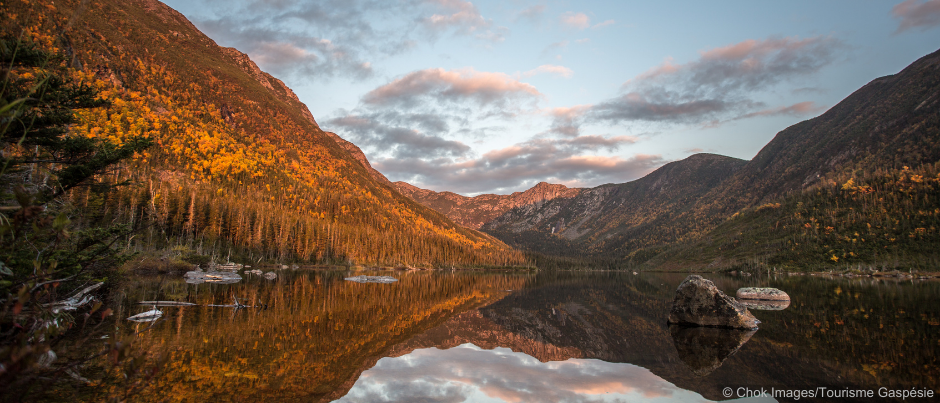
As soon as you set foot in Parc national de la Gaspésie, you’ll be awed by the immense Chic-Choc Mountains. Everything seems larger than life in this park, which covers an area of over 800 km² (300 sq. mi.) and is an ideal natural playground for hikers and mountain lovers.
- How to get there:
- The Discovery and Visitors Centre in the Mont-Albert sector is accessible via Route 299 and is about 40 km (25 mi.) south of Sainte-Anne-des-Monts and 100 km (60 mi.) north of New Richmond.
- The Lac-Cascapédia sector is accessible via Route 11, which branches off Route 299 at km 22.
- The Mont Jacques-Cartier sector is accessible from the village of Mont-Saint-Pierre via Route 2 or from the Mont-Albert sector via Route 16.
- When it’s open: The park is open year-round, but services vary depending on the season. Please note that the access roads to the Lac-Cascapédia and Mont Jacques-Cartier sectors are not plowed in the winter.
- Distinctive features: The park is a sea of mountains, home to 25 peaks over 1000 metres (3300 feet) high!
- What to do in the park: Offering over 140 km (85 mi.) of trails, this park is a mecca for hikers. The 17-km (10.5-mi.) Tour-du-Mont-Albert loop, an expert trail, is a classic that will provide you with a definite physical challenge, while the Mont-Ernest-Laforce trail is a more accessible alternative that offers a striking 360-degree view of the surrounding mountains. Nestled in a magnificent glacial valley, Lac aux Américains is a cirque that’s well worth the short (and easy!) hike. You can also enjoy a variety of water sports in the park, particularly (but not only) on Lake Cascapédia, where you can rent canoes, kayaks, pedal boats, stand-up paddleboards and more. In the winter, you can explore the park on snowshoes, a fatbike or skis (cross-country, Nordic or backcountry).
- Signature wildlife species: Keep your eyes peeled and you may be lucky enough to catch a glimpse of an endangered woodland caribou, from the only herd found south of the St. Lawrence. You may also spot other more common but equally impressive wildlife such as moose, white-tailed deer and over 150 species of birds.
- Lodging options: Four campgrounds offering over 200 sites are located within the park’s boundaries. You can also opt to stay in a cabin, glamping unit or the magnificent Gîte du Mont-Albert hotel.
Forillon National Park
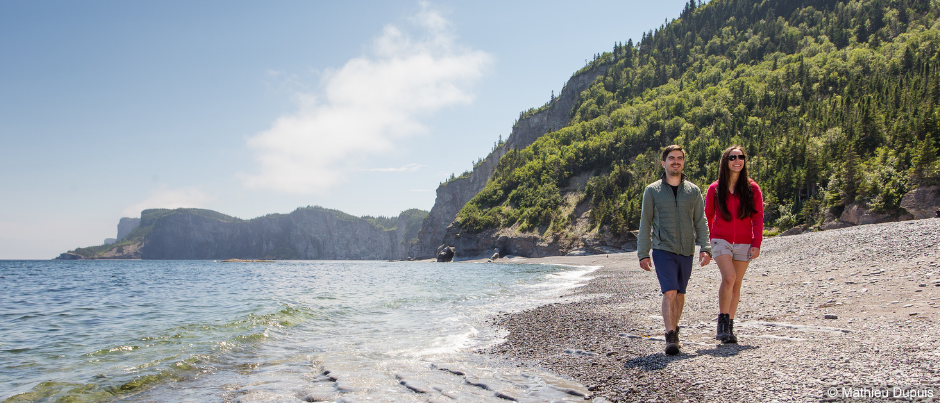
Located at the tip of the Gaspé Peninsula, in Gaspé, Forillon National Park is a natural wonder where sea meets mountains and exceptional landscapes coexist with abundant wildlife.
- How to get there: The South and North areas of the park are both accessible via Route 132.
- When it’s open: The park is open from late May to late October. Outside this period, some trails remain accessible but are not maintained.
- Distinctive features: Located on a peninsula nestled between the Gulf of St. Lawrence and Gaspé Bay, the park protects an exceptional natural setting featuring beaches, cliffs, forests and mountains.
- What to do in the park: The park’s dramatic landscapes make it a prime hiking destination. The Mont-Saint-Alban trail is particularly popular since it leads to an observation tower that offers a magnificent view of the tip of the peninsula. Another must-see is the Cap-Gaspé Lighthouse at Land’s End. If you’re a wildlife lover, you’ll want to set off on a guided sea kayaking excursion to see seals or embark on a whale-watching cruise. Finally, heritage enthusiasts can discover the history of cod fishing in Gaspésie at the Hyman & Sons General Store or learn more about World War II by visiting the Fort Peninsula shore battery. Although closed in the winter, the park remains accessible for cross-country skiing, snowshoeing and fatbiking.
- Signature wildlife species: Forillon National Park is an exceptional place to see wildlife. While it’s not uncommon to encounter moose in the park even in broad daylight, you may also be lucky enough to spot black bears. Along the coast, you’ll find lots of seals basking on the rocks and may even see whales.
- Lodging options: The park offers over 340 tent and RV sites, 5 backcountry wilderness campsites, oTENTik and Oasis glamping units as well as one micrOcube mini cabin.
Parc national de l’Île-Bonaventure-et-du-Rocher-Percé

Parc national de l’Île-Bonaventure-et-du-Rocher-Percé protects two remarkable natural attractions in Gaspsésie: iconic Percé Rock, the region’s most famous landmark, and Bonaventure Island, an exceptional migratory bird sanctuary.
- How to get there: The park is located off the coast of Percé. You cannot approach Percé Rock on foot, but a boat departing from the Percé wharf will take you around the rock and then stop at Bonaventure Island so you can explore it.
- When it’s open: Bonaventure Island is accessible from early June to mid-October.
- Distinctive features: The park is of course home to Percé Rock, a massive limestone formation with a natural arch that rises out of the Gulf of St. Lawrence, as well as the largest colony of northern gannets in North America, found on Bonaventure Island.
- What to do in the park: Go on a boat trip to see Percé Rock up close and sail around Bonaventure Island. On board, an interpreter guide will tell you more about the surrounding area and local wildlife. Once you disembark on the island, you can explore four hiking trails that lead to the northern gannet colony as well as visit several heritage houses along the way. A few of these buildings house exhibitions recounting the lives of the island’s former inhabitants.
- Signature wildlife species: Bonaventure Island is one of North America’s largest and most significant migratory bird sanctuaries and is home to about 110,000 northern gannets in the world’s most accessible colony of these birds!
- Lodging options: The park doesn’t offer any accommodations, but you’ll find many lodging establishments in Percé.
Parc national de Miguasha
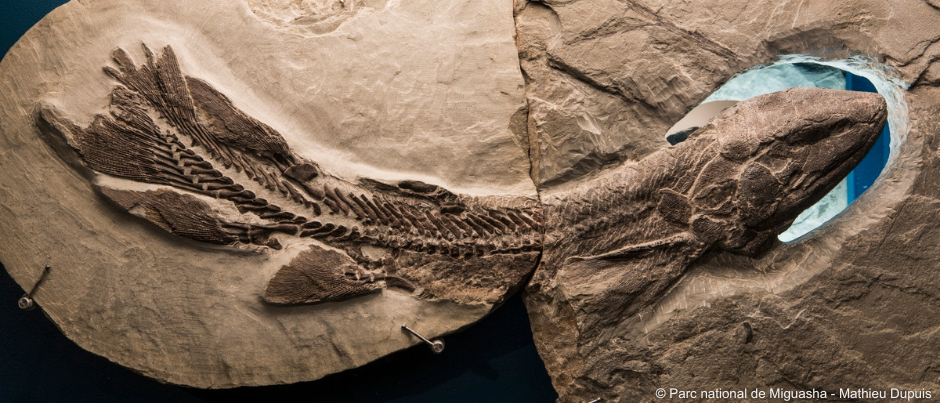
Located in the La Baie-des-Chaleurs sector, Parc national de Miguasha will take you on a journey some 380 million years back in time. Recognized worldwide as a remarkable paleontological site, this park is a UNESCO World Heritage Site.
- How to get there: The park is accessible from Route 132, via Route d’Escuminac Flats in Escuminac or via Route de Miguasha E in Nouvelle.
- When it’s open: The park is open from early June to mid-October.
- Distinctive features: Included on the prestigious UNESCO World Heritage List, the Miguasha fossil site is renowned worldwide for its unusually well-preserved fossils.
- What to do in the park: The park’s discovery centre houses a permanent exhibition featuring numerous fossils discovered on site, including the world’s only complete specimen of Elpistostege watsoni. A 3.5-km (2-mi.) trail dotted with interpretive panels offers a pleasant walk to the fossil cliff, where you’ll find a naturalist park ranger who will be happy to answer all your questions.
- Lodging options: The park doesn’t offer any accommodations. However, you’ll find various lodging establishments nearby, including [ÈST] Éco-cabines and Riôtel Carleton-sur-Mer. Parc regional du Mont-Saint-Joseph also offers lodging options.
Gaspésie is a magnificent place to visit, and the region’s national parks are yet another reason to plan a trip there. For more information about the national parks in the maritime regions of Québec, visit our National Parks page. You can also read our blog posts about the national parks in Bas-Saint-Laurent and Côte-Nord. Bon voyage!
If you liked this article, you might also like...
Author Valère Brable

Having grown up in the Vosges Mountains in France and the jungles of French Guiana, Valère Brable eventually settled near the sea in Matane, in Gaspésie, in 2018. With a degree in tourism and a love of the great outdoors, he likes to take advantage of his free time to hit the road and explore the regions of Québec.
(0) comment